Currently Empty: $0.00

Cold season always seems to hit at the worst possible time – right before a big presentation, during a packed training week, or when your routine is finally dialed in. That is exactly why interest in black seed oil for immunity keeps growing. People want something simple, consistent, and easy to stick with, not a complicated stack of wellness products they forget after three days.
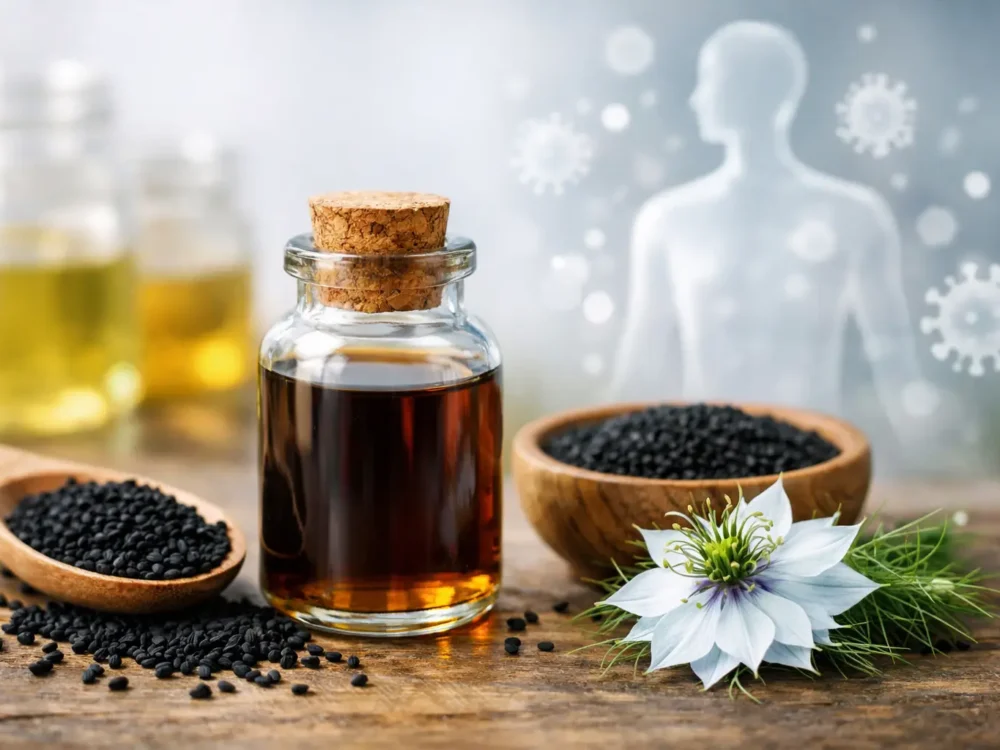
Black seed oil comes from Nigella sativa, a small flowering plant whose seeds have been used in traditional wellness practices for centuries. Today, it is getting renewed attention because it sits at the intersection many modern shoppers care about most: traditional use, active compounds with real research interest, and convenient daily formats like oils and softgels. If you are wondering whether it deserves a place in your routine, the short answer is this: it may be useful, but expectations should be realistic and quality matters.
How black seed oil for immunity may work
The reason black seed oil gets so much attention is not just the plant itself. It is the presence of naturally occurring compounds, especially thymoquinone, often shortened to TQ. This is the component most often discussed in research because it appears to have antioxidant and anti-inflammatory activity.
That matters for immunity because your immune system does not operate in isolation. Sleep, stress, training load, diet quality, and inflammation all influence how well your body responds. Black seed oil is not a magic shield against getting sick. What makes it interesting is that it may help support the broader environment your immune system relies on.
Some early and moderate-quality research suggests black seed oil may help modulate immune responses rather than simply “boost” immunity across the board. That distinction is worth making. A healthy immune system is balanced. You want it responsive when needed, but not overreactive all the time. When a supplement is framed as supporting normal immune function, that is usually a more useful claim than exaggerated promises.
What the research says – and what it does not
The science around black seed oil is promising, but it is still a category where nuance matters. Studies have looked at Nigella sativa and its compounds in relation to inflammation, oxidative stress, respiratory health, and certain markers connected to immune activity. Some findings are encouraging, especially in small human trials and preclinical research.
Still, this is not the same as saying black seed oil has been proven to prevent infections or replace medical care. Research quality varies. Dosages differ from study to study. Product standardization is not always consistent. That means one bottle on the market may not be comparable to another, even if the front label looks similar.
For everyday buyers, the practical takeaway is simple. Black seed oil may be a supportive wellness tool, especially as part of a consistent routine, but it should not be treated like a cure-all. The better question is not “Will it work overnight?” but “Does this fit into a long-term routine built around sleep, nutrition, movement, and stress management?”
Why format matters more than most people think
One reason people give up on supplements is not because the product is bad. It is because the routine is inconvenient. Strong taste, messy oils, inconsistent serving sizes, or simply forgetting to take them can all get in the way.
That is why format matters. Liquid black seed oil can appeal to people who want a traditional approach and do not mind the bold, peppery taste. Softgels make more sense for busy professionals, frequent travelers, or anyone who wants consistency without the sensory hurdle. If you are trying to build a supplement habit that lasts longer than a week, convenience is not a small detail. It is often the deciding factor.
A high-thymoquinone black seed oil may also be worth looking at if your goal is to choose a product built around the compound most associated with black seed oil’s wellness benefits. Clean-label cues matter too. Many shoppers now want vegan, non-GMO, cruelty-free, or organic options because purity and trust are part of the purchase decision, not an afterthought.
How to use black seed oil for immunity in real life
If you want to try black seed oil for immunity, consistency is more important than taking a huge amount once in a while. Most people do better with a steady daily routine that feels easy to maintain. That could mean taking it with breakfast, after a workout meal, or alongside other supplements you already use.
Start with the serving guidance on the product label rather than guessing. Different oils and softgels can vary in concentration, especially if they are standardized around thymoquinone content. More is not automatically better. In fact, taking too much too fast can make it harder to tell whether the product suits you.
Timing is flexible. Some people prefer taking black seed oil with food, especially if they find oils intense on an empty stomach. Others simply choose the same time every day to reduce missed doses. The best routine is usually the one you can repeat without effort.
Who may benefit most
Black seed oil tends to appeal to people who want a simple, remedy-forward addition to a broader wellness plan. That includes adults who deal with frequent schedule stress, intense training blocks, poor sleep during busy periods, or seasonal wellness concerns. It can also make sense for shoppers who prefer natural health staples but still want modern convenience.
That said, the right candidate is not someone expecting instant results. It is someone willing to use it steadily and pair it with the basics that actually move the needle: adequate sleep, enough protein, nutrient-dense meals, hydration, and manageable stress.
If your current lifestyle is running on four hours of sleep, back-to-back takeout, and nonstop stress, no supplement will fully compensate. Black seed oil can support a routine. It cannot replace one.
What to look for before you buy
Not all black seed oil products are created equal. Source quality, extraction method, concentration, and storage all affect the end product. If you are comparing options, look past the front-label marketing and pay attention to what signals quality.
A strong formula should clearly communicate what it contains and how to use it. If thymoquinone content is highlighted, that can be a meaningful differentiator. Freshness also matters because oils can degrade over time. Packaging that helps protect the oil from light and heat is a practical plus.
For many shoppers, clean product signals help narrow the field. Non-GMO, organic, vegan-friendly, and cruelty-free claims can matter, especially if they align with your broader buying habits. A brand that makes routine use easy through softgels or straightforward serving instructions also has an edge. Convenience supports compliance, and compliance matters more than wellness aspirationally sitting in your cabinet.
Safety, side effects, and when caution makes sense
Black seed oil is generally used as a wellness supplement, but that does not mean it is right for everyone. Some people may experience digestive discomfort, especially with liquid oil or larger servings. Taste can also be a barrier. That is one reason softgels are often the more practical fit.
If you are pregnant, breastfeeding, taking medication, or managing a medical condition, it is smart to check with a qualified healthcare professional before starting. This is especially relevant if you take medications related to blood sugar, blood pressure, or blood thinning, since botanicals can interact in ways people do not always expect.
And if your goal is immune support during a period of recurring illness, severe fatigue, or ongoing symptoms, supplements should not delay proper medical evaluation. Wellness products are best used to support health, not to mask problems that need diagnosis.
The smarter way to think about immune support
The biggest mistake people make with immunity is chasing a single hero product. The smarter approach is stacking simple habits that work together. Black seed oil can fit into that picture well because it is easy to use, widely recognized, and backed by growing research interest. But it works best when it is not asked to do the job alone.
A useful baseline looks less glamorous than most marketing claims. Sleep enough. Eat enough protein and fiber. Stay hydrated. Keep training hard, but recover hard too. Use supplements that match your routine instead of complicating it. That is where a high-quality black seed oil can make sense, especially if it comes in a format you will actually take consistently.
For shoppers who want traditional wellness with a cleaner, more convenient daily experience, Sterling Nutrition’s approach reflects what the category should be doing more of: making supportive products easier to use without losing sight of quality.
If black seed oil has been on your radar, the best next step is not to overthink it. Choose a quality product, use it consistently, and let it support the habits your immune system depends on every day.