
Currently Empty: $0.00

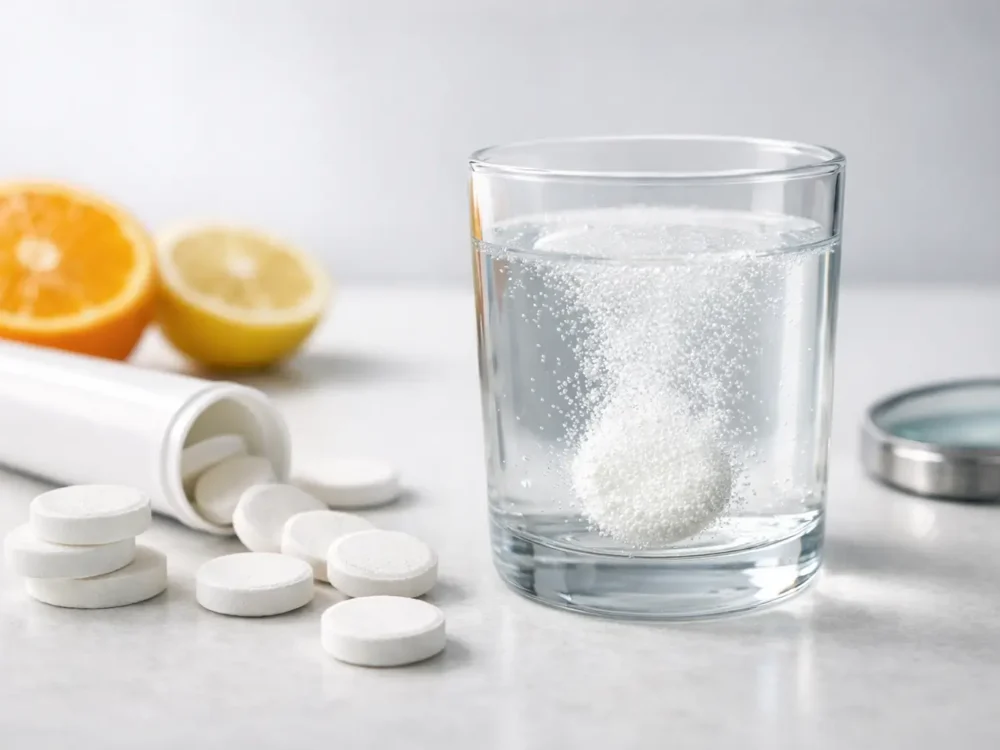
A fizzy tablet can make hydration, vitamins, or electrolytes far easier to remember. But are effervescent tablets sugar free? Sometimes. The bubbles and bright flavor can come with no added sugar, a small amount of sugar, or sweeteners that are calorie-free but still worth understanding. The answer is always on the label, not in the word “effervescent.”
For busy professionals, gym regulars, and anyone replacing sweet bottled drinks with a functional wellness option, that distinction matters. A tablet that fits your nutrition goals should support a routine you can keep, without turning every glass of water into a hidden source of sugar.
Are Effervescent Tablets Sugar Free by Default?
No. Effervescence is simply the reaction that creates fizz when a tablet meets water. In most formulas, an acid such as citric acid reacts with a carbonate or bicarbonate. That process has nothing to do with whether the product contains sugar.
Some effervescent tablets use sugar to soften tart flavors or improve the taste of minerals and vitamins. Others are made with non-sugar sweeteners, while some are unsweetened and have a more naturally tart or mineral-forward taste. A “zero sugar” front-label claim can be useful, but the Supplement Facts or Nutrition Facts panel and full ingredient list give the real answer.
This is especially relevant with electrolyte tablets. Sodium, potassium, magnesium, and certain vitamins can taste salty, bitter, or sharp. Sweetness and flavoring make them easier to drink, which is a practical benefit. The better choice depends on your goals, how often you use the product, and the rest of your daily intake.
How to Tell if an Effervescent Tablet Contains Sugar
Start with the nutrition panel. If a tablet has sugar, the amount is generally listed under Total Carbohydrate and Total Sugars. If the product states “Includes Added Sugars,” that tells you the sugar was added during formulation rather than occurring naturally in an ingredient.
Then read the ingredients, not just the marketing language. Terms such as sugar, cane sugar, glucose, dextrose, fructose, maltodextrin, syrup, and honey can signal that a product contains sugar or sugar-based carbohydrates. The amount per serving still matters. A trace amount used in processing is different from several grams per tablet, especially if you use it every day.
A product labeled “no added sugar” is not always identical to “sugar free.” In the U.S., “sugar free” has a specific labeling meaning and generally contains less than 0.5 grams of sugar per serving. “No added sugar” means no sugar was added during production, but naturally occurring sugars may still be present. With supplements, those claims can also vary based on the product category and market, so verify the panel rather than assuming.
Watch serving size and daily use
One tablet may be one serving, but not always. Some formulas recommend two tablets or multiple drinks per day. If you take an electrolyte drink before training, another during a long session, and a vitamin tablet later, small amounts can add up.
This does not mean every gram of sugar is a problem. During prolonged endurance exercise, carbohydrates can serve a purpose by providing fast fuel. But for a desk-day hydration routine, a sugary effervescent tablet may not match what you intended to choose. Context is the deciding factor.
Sugar-Free Does Not Always Mean Unsweetened
Many sugar-free effervescent tablets contain sweeteners to balance acidity and make daily use enjoyable. Common options include stevia, monk fruit, sucralose, acesulfame potassium, erythritol, xylitol, and other sugar alcohols. Each has a different taste profile and potential trade-off.
Stevia and monk fruit are plant-derived, which appeals to shoppers who prefer naturally sourced sweetness. Their aftertaste can be noticeable in some formulas, particularly alongside minerals. Sucralose and acesulfame potassium deliver a familiar sweet taste without sugar, though some people prefer to limit or avoid them based on personal preference.
Sugar alcohols may have fewer calories than sugar, but they are not suitable for everyone. Larger quantities can cause bloating, gas, or loose stools in sensitive people. That matters less with a single tablet containing a modest amount, but it is still useful to know if you are already consuming protein bars, gums, or other sugar-free products during the day.
The practical takeaway is simple: sugar-free refers to sugar content, not necessarily to a completely neutral formula. If you are choosing a clean-label supplement, review the sweetener, flavor system, colors, and other inactive ingredients alongside the active nutrients.
What Else Matters More Than Sugar?
Sugar is one part of the label, not the full quality check. An effervescent tablet should also provide ingredients and dosages that fit the reason you are taking it.
For electrolytes, look at sodium first. Sodium is often the key electrolyte lost through sweat, so an extremely low-sodium formula may not be enough for hot-weather training or long sessions. Potassium and magnesium can complement a formula, but more is not automatically better. Consider the duration and intensity of your workout, your sweat rate, and any health conditions or medications that affect electrolyte balance.
For vitamin effervescents, check the amount of each nutrient rather than assuming a higher number is superior. Some nutrients can accumulate or interact with medication. If you are pregnant, have kidney disease, manage diabetes, take blood pressure medication, or have been told to limit sodium or potassium, ask a qualified health professional before making electrolyte supplements a routine.
Also consider what helps you stay consistent. A tablet you enjoy dissolving in cold water may be more useful than an ideal-looking formula you never take. Clean ingredients, sensible nutrient levels, and a flavor you genuinely like are a strong combination for everyday wellness.
Choosing the Right Tablet for Your Routine
For everyday hydration, a sugar-free or low-sugar effervescent tablet can be a smart alternative to soda, sweetened coffee drinks, or high-sugar sports beverages. Use it when plain water feels repetitive, when travel disrupts your usual routine, or when you want a convenient way to support hydration.
For workouts under an hour at a moderate intensity, water is often sufficient, depending on the heat and your individual needs. A sugar-free electrolyte tablet can still be useful if you sweat heavily or want a flavored option that encourages you to drink more. For longer endurance sessions, a product with carbohydrates may be appropriate if you need fuel as well as fluids and electrolytes.
If your priority is managing blood sugar, choosing a clearly labeled sugar-free product is reasonable, but sweeteners can affect people differently. Pay attention to how you feel, especially if a formula contains sugar alcohols. Those with diabetes should also discuss their supplement routine with their health care team rather than relying on front-label claims alone.
A quick label-check routine
Before adding a tube to your cart, take 30 seconds to confirm the sugar grams per serving, serving size, type of sweetener, sodium level, and the nutrients you actually want. Finally, check for dietary preferences that matter to you, such as vegan, non-GMO, or allergen-conscious ingredients.
That small habit prevents a common mistake: buying a product because it sounds healthy, then discovering it does not suit your daily routine. Convenience should make wellness simpler, not create another label mystery.
The best effervescent tablet is not defined by fizz alone. Choose one with transparent labeling, ingredients you feel good about, and a taste that makes reaching for water the easy choice.