Currently Empty: $0.00

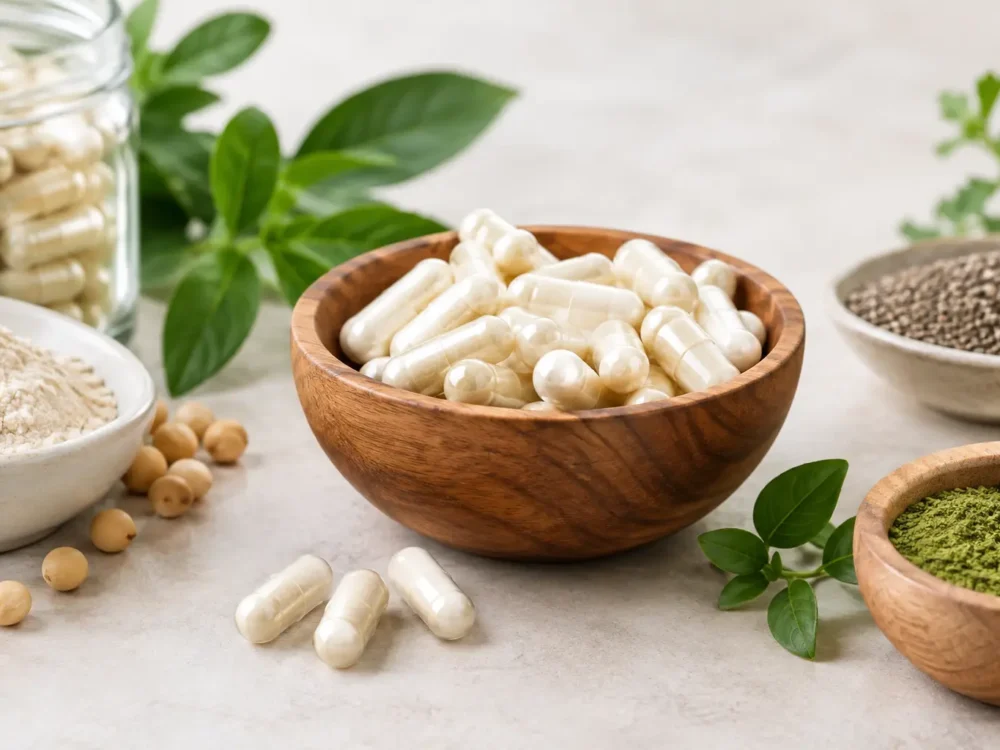
A supplement can say “vegan” on the front while still leaving plenty to investigate on the back. This guide to vegan capsule ingredients helps you read beyond the headline, so you can choose plant-based capsules that fit your wellness routine, dietary preferences, and clean-label standards.
For busy adults, capsules are one of the simplest ways to stay consistent with daily wellness. No measuring, no strong taste, and no complicated prep. But a vegan capsule is more than a plant-based shell. The active ingredient, carrier oils, fillers, coatings, and manufacturing standards all shape what you are actually taking.
What Makes a Capsule Vegan?
At its simplest, a vegan capsule contains no animal-derived ingredients. Traditional hard capsules are often made from gelatin, which is typically sourced from animal collagen. Gelatin softgels may be convenient, but they do not meet vegan requirements.
Vegan capsules replace gelatin with plant-derived or fermentation-derived materials. The most common option is hydroxypropyl methylcellulose, usually shortened to HPMC. You may also see pullulan, a naturally produced polysaccharide created through fermentation. Both are widely used for hard capsules containing powders, extracts, vitamins, and minerals.
Softgels require more flexibility than two-piece hard capsules, so their formulas can be more complex. Vegan softgels often use modified starches, carrageenan, gellan gum, or plant-based glycerin. The ingredient list matters here because “vegetarian” and “vegan” are not interchangeable claims. A vegetarian softgel may still contain gelatin.
Guide to Vegan Capsule Ingredients: The Shell
The shell is the first ingredient to check because it determines whether a capsule is genuinely animal-free. It also affects how the capsule performs in storage and how comfortably it fits into your routine.
HPMC Capsules
HPMC is one of the most common vegan capsule materials. It is derived from cellulose, a plant fiber, and is valued for its stability in different humidity conditions. HPMC capsules work well with dry ingredients such as botanical powders, herbal extracts, electrolytes, and vitamins.
For most shoppers, HPMC is a practical choice. It has a neutral taste, is easy to swallow, and supports a clean, straightforward ingredient profile. It is especially common in daily capsules designed for consistent use.
Pullulan Capsules
Pullulan capsules are made through fermentation and are often chosen for their strong oxygen barrier. That can be useful for ingredients that are more sensitive to oxidation. They are also clear, smooth, and suitable for vegan formulas.
The trade-off is that pullulan capsules can cost more to produce. A higher price does not automatically mean a better supplement, but the format may be worth considering when freshness and ingredient protection are central to the formula.
Vegan Softgel Materials
Oil-based ingredients need a softgel or liquid capsule format. Plant oils, omega-rich formulas, and certain herbal oils are common examples. Vegan softgels may use starch, seaweed-derived ingredients, and plant-based glycerin to create a flexible shell.
This is where label reading pays off. Check both the softgel shell ingredients and the oil inside it. A plant-based shell does not guarantee that every other component meets your personal standards for vegan, non-GMO, organic, or allergen-conscious supplementation.
The Active Ingredient Matters Just as Much
A capsule shell may be vegan, but the active ingredient still needs a closer look. Many botanical ingredients are naturally plant-based, including black seed oil, moringa, Ajwa seed powder, turmeric, and herbal extracts. Yet the source and processing method can vary significantly from one product to another.
For example, a botanical powder may be minimally processed and placed directly into a capsule, while a standardized extract may use solvents or require additional processing to concentrate specific compounds. Neither format is automatically superior. Powders can offer a whole-food profile, while extracts can provide a more consistent concentration of a targeted compound.
Oil-based supplements bring another consideration: freshness. Natural oils can degrade when exposed to heat, oxygen, or light. A quality capsule formula should use appropriate packaging and a format designed to protect the oil until use. For wellness staples you plan to take daily, reliability matters as much as convenience.
Fillers, Flow Agents, and Other Supporting Ingredients
Not every ingredient on a supplement facts panel is an active nutrient. Capsules often include supporting ingredients that help the formula flow through manufacturing equipment, remain stable, or deliver a consistent amount in each serving.
Common vegan-friendly supporting ingredients include rice flour, tapioca starch, vegetable cellulose, silicon dioxide, and magnesium stearate derived from vegetable sources. These ingredients are not necessarily red flags. In many cases, they serve a functional purpose and are used in very small amounts.
The better question is whether the full formula is transparent and appropriate for the product. A simple botanical capsule may only need the herb and a plant-based shell. A more complex formula, such as a blend with several vitamins and minerals, may reasonably need additional processing aids. Look for brands that clearly identify what is included instead of hiding behind vague terms.
Be especially cautious with broad phrases such as “proprietary blend” when they do not disclose the amount of each active ingredient. If you cannot see how much of a key ingredient is in a serving, it is harder to compare products or build a thoughtful routine.
Watch for Ingredients That May Not Be Vegan
Some ingredients require extra scrutiny because their source can vary. Magnesium stearate, for instance, can be made from plant or animal sources. Reputable vegan products should specify vegetable-derived magnesium stearate or carry a credible vegan claim.
Other ingredients to investigate include glycerin, vitamin D3, omega-3 oils, certain probiotics, and flavoring systems. Glycerin can be plant-derived or animal-derived. Conventional vitamin D3 is often sourced from lanolin, though vegan D3 from lichen is available. Omega-3s may come from fish oil or algae, while probiotic suitability depends on both the strain and the growth medium used during production.
Colorants and coatings also deserve attention. Clean-label shoppers may prefer capsules without artificial colors, titanium dioxide, or unnecessary glazing agents. These choices are partly personal, but a shorter, clearly explained ingredient list can make selecting a daily supplement easier.
How to Read a Vegan Capsule Label With Confidence
Start with the Supplement Facts panel, then read the “other ingredients” section with equal care. The active ingredient tells you what the product is designed to deliver. The other ingredients tell you how it is delivered.
Look for clear language such as “vegan capsule,” “vegetable capsule,” “HPMC capsule,” or “pullulan capsule.” Then confirm that the brand’s vegan statement applies to the entire product, not only the shell. If you have allergies, check for soy, gluten, tree nuts, or shared-facility disclosures as well.
Quality cues should support, not replace, a full label review. Non-GMO, cruelty-free, organic, and natural-ingredient claims can be meaningful, particularly for shoppers building a cleaner routine. Still, these claims do not tell you everything about dosage, ingredient sourcing, or formula design.
Choose a serving size you can realistically maintain. A single daily capsule may suit a busy workday better than a formula requiring multiple large capsules. For oil-based ingredients, softgels can offer a more convenient and mess-free option. For powders and extracts, hard vegan capsules are often the most direct format.
Vegan Does Not Automatically Mean Better for Everyone
A vegan capsule is the right choice for people avoiding animal-derived ingredients, but it is not a shortcut to product quality. A well-made gelatin softgel may have a clean, effective formula, while a vegan capsule can still contain unnecessary additives or an underdosed active ingredient.
Your best choice depends on your priorities. If you follow a vegan lifestyle, the decision is clear: verify the full formula and choose a clearly labeled vegan product. If your main focus is ingredient simplicity, compare the shell, active ingredients, and excipients rather than judging the product by one front-label claim.
People who are pregnant, nursing, managing a health condition, or taking medications should check with a qualified healthcare professional before adding supplements. This is particularly relevant for concentrated botanical extracts and products intended to support energy, hydration, blood sugar, blood pressure, or other body functions.
A capsule should make your wellness routine easier to keep, not harder to understand. Choose transparent vegan ingredients, a format that fits your day, and a formula with a clear purpose. That is the kind of simple, consistent decision that supports a routine you can actually maintain.