Currently Empty: $0.00

That 3 p.m. slump after a sweaty workout or a long day outside often gets blamed on “dehydration,” but the fix is not always the same. When people compare electrolytes vs sports drinks hydration, they are usually asking a more useful question: do I need plain fluids, added minerals, quick carbs, or all three?
The right answer depends on how long you were active, how much you sweat, and what your goal is. If you are trying to feel better fast, avoid overpaying for sugar you do not need, and build a hydration routine you can actually stick to, it helps to know where electrolytes end and sports drinks begin.
Electrolytes vs sports drinks hydration: what is the difference?
Electrolytes are minerals that help regulate fluid balance, nerve signaling, and muscle function. The main ones people talk about for hydration are sodium, potassium, magnesium, and sometimes calcium. You lose some of these through sweat, especially sodium.
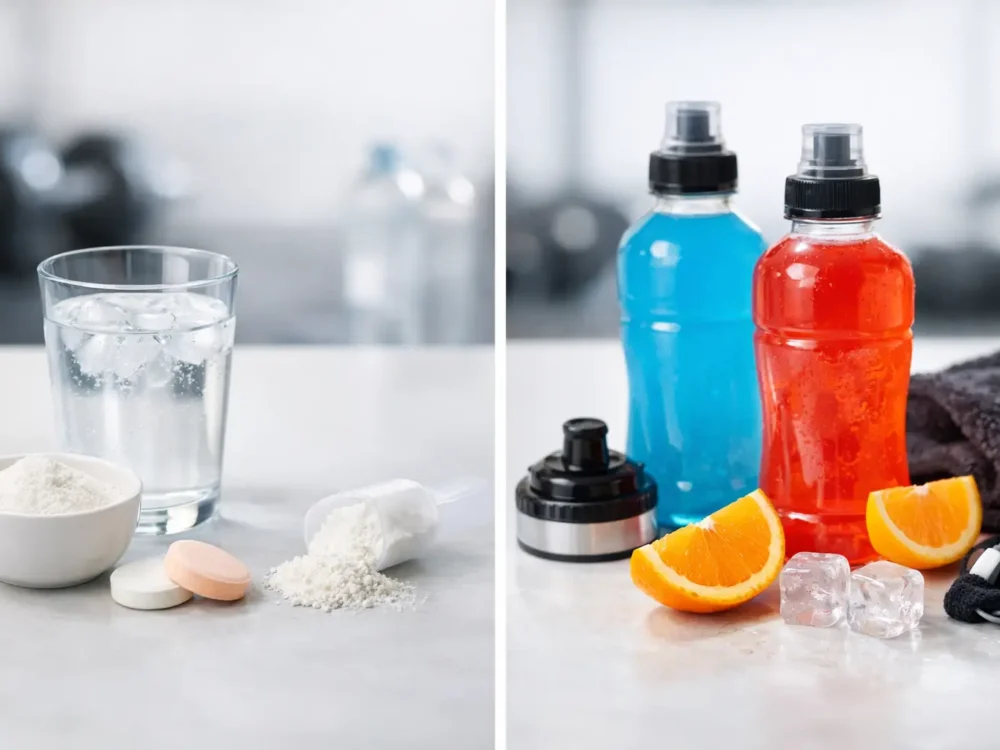
Sports drinks are packaged beverages designed to support hydration during or after exercise. Many contain electrolytes, but they often also include sugar or other carbohydrates, flavorings, acids, and colorants. That means a sports drink is not the same thing as electrolytes alone. It is one delivery format, and not always the cleanest or most targeted one.
This is where confusion starts. People say they “need electrolytes” when what they really mean is they want a sports drink. Others avoid all sports drinks because they think every product is loaded with sugar. Both views miss the middle ground.
If your main goal is replacing minerals lost through sweat without extra calories, an electrolyte tablet, capsule, or low-sugar mix may make more sense. If you are doing prolonged endurance training and need both sodium and fast carbohydrates, a traditional sports drink can be useful.
When plain water is enough
For many adults, plain water still does most of the heavy lifting.
If your workout is under an hour, the intensity is moderate, and you are not training in extreme heat, water is often enough. The same goes for normal day-to-day hydration in an office, during errands, or between meals. You do not need to turn every sip into a performance formula.
This matters because hydration products can become a habit even when they are not necessary. If you are drinking multiple sweetened sports drinks a day for basic hydration, you may be adding a surprising amount of sugar and cost to a problem that water could solve.
The trade-off is that water alone may fall short when sweat losses are high. If you finish a session drenched, feel cramp-prone, develop a headache, or notice that plain water is not quite helping you bounce back, electrolytes may be the missing piece.
When electrolytes make more sense than sports drinks
Electrolytes shine when fluid balance is the goal and sugar is not.
That includes hard gym sessions, hot-weather walks, pickleball, long runs, cycling, travel days, and any routine where you sweat more than usual. They are also practical for busy professionals who want convenient hydration support without carrying a bottle of sugary drink around all day.
Sodium is the big one here. It helps your body retain fluid and supports hydration more effectively than water alone after significant sweat loss. Potassium and magnesium can also play a supporting role, especially if your overall intake is low.
The format matters too. Effervescent tablets and capsules can fit routines better than ready-to-drink sports beverages. They are easier to store, simpler to dose, and often align better with clean-label preferences. For shoppers who care about vegan, non-GMO, or natural-ingredient positioning, that convenience-plus-purity combination is a real advantage, not just a nice extra.
When sports drinks are the better call
Sports drinks earn their place during longer or more intense sessions where carbohydrate intake matters.
If you are training for endurance, doing repeated high-output sessions, or exercising for more than 60 to 90 minutes, a drink that provides both sodium and easily absorbed carbs can help maintain performance. In those settings, sugar is not automatically a negative. It can be functional fuel.
That said, not every workout needs that level of support. A 45-minute strength session is not the same as a two-hour run in high humidity. A lot of people use sports drinks for the image of performance when they really need a glass of water and a decent meal.
The practical question is this: are you trying to replace sweat losses only, or replace sweat losses while also fueling prolonged exercise? If it is the first, electrolytes alone are often enough. If it is the second, sports drinks may be more appropriate.
Electrolytes vs sports drinks hydration for weight goals and daily wellness
This is where the choice becomes less about athletics and more about everyday decision-making.
If you are watching sugar intake, trying to maintain a calorie deficit, or simply want a cleaner routine, electrolyte products usually offer more control. You can support hydration without turning every bottle into a snack.
Sports drinks can also create a “health halo” problem. Because they are sold around fitness, people assume they are always healthy. But many are closer to soft drinks than most buyers realize, especially when used casually rather than during actual endurance activity.
On the other hand, ultra-low-sodium hydration products are not automatically better. If you are a heavy sweater, a product with too little sodium may taste nice but underdeliver where it counts. Label reading matters. You want enough electrolytes to be useful, not just a wellness-looking product with trace amounts.
How to choose the right hydration option
Start with your situation, not the marketing.
Think about duration first. Under an hour of typical exercise usually points to water. Longer sessions, especially in the heat, increase the case for electrolytes and sometimes carbs.
Then think about sweat. If your clothes are soaked, you see salt marks on your shirt, or you routinely feel drained after exercise, you probably need more than plain water. Heavy sweaters generally benefit from more intentional electrolyte replacement.
Next, consider your goal. If you want everyday hydration support, travel-friendly convenience, and a cleaner ingredient profile, electrolyte capsules or effervescent tablets are a smart fit. If you need on-the-go fuel for longer efforts, sports drinks can be practical.
Finally, look at the label with a little skepticism. Ask how much sodium is actually included, how much sugar you are getting, and whether the formula matches your real use case. Taste matters too, because the best hydration product is still the one you will consistently use.
For shoppers building a simple routine, this is where streamlined formats stand out. Sterling Nutrition focuses on convenient hydration options that fit real life, not just race day, which is why capsules and effervescents appeal to customers who want performance support without unnecessary complexity.
Common mistakes people make with hydration
One common mistake is waiting until you feel awful. Thirst, fatigue, and headaches often show up after hydration has already slipped. A better approach is to hydrate steadily before, during, and after activity rather than trying to catch up all at once.
Another mistake is assuming more is always better. Overdoing plain water without enough sodium can leave you feeling off, especially after prolonged sweating. The goal is balance, not volume for its own sake.
A third mistake is using sports drinks as an all-day beverage. If you enjoy them and they fit a specific workout need, great. But for routine hydration, they are often more than you need and less targeted than an electrolyte-focused product.
The smarter way to think about hydration
The most useful way to frame electrolytes vs sports drinks hydration is not which one “wins.” It is which one matches the moment.
Water covers a lot of ground. Electrolytes are the upgrade when sweat loss is high and you want mineral support without extra sugar. Sports drinks are the more specialized option for longer, harder efforts that also require carbohydrates.
That means your best hydration strategy may include all three at different times. Water for daily life, electrolytes for heat and sweat, and sports drinks for endurance or heavy training blocks. The win is not choosing one camp. It is making hydration easier, cleaner, and more effective for the way you actually live.
The next time you reach for a bottle, ask one simple question first: am I replacing fluids, replacing minerals, or fueling performance? Once you answer that, the right choice gets a lot clearer.