Currently Empty: $0.00

If your hair feels dry at the ends, flat at the roots, or stressed from heat styling and tight schedules, castor oil earns its place fast. Knowing how to use castor oil for hair is less about pouring on as much as possible and more about using the right amount, the right method, and the right frequency for your hair type.
Castor oil has a thick texture and a reputation for making hair look shinier, feel more coated, and appear healthier over time. It is especially popular in routines built around scalp care, breakage prevention, and moisture retention. But thicker does not always mean better. If you use too much, it can leave buildup, weigh hair down, and make wash day harder than it needs to be.
Why castor oil works well in hair routines
Castor oil is rich, dense, and naturally occlusive, which means it helps seal moisture into the hair shaft rather than acting like a light mist that disappears in an hour. That is why it is often used on dry ends, edges, and areas prone to snapping. For people with curly, coily, or high-porosity hair, this heavier feel can be a plus.
On the scalp, castor oil is often used as part of a massage routine. The massage itself matters. It helps distribute product, loosens surface buildup, and supports a consistent self-care habit that people actually stick to. If your goal is a healthier-looking scalp and stronger-feeling strands, consistency beats intensity every time.
That said, castor oil is not a miracle fix for every hair concern. If you have active scalp irritation, heavy dandruff, sudden shedding, or patchy hair loss, oil alone is not the full answer. In those cases, it makes sense to pause and get expert advice rather than layering more product on top of a scalp that is already struggling.
How to use castor oil for hair based on your goal
The best method depends on what you want from it. A scalp treatment is different from a shine booster, and a dry-end rescue is different from an overnight mask.
For scalp care and fuller-looking roots
Start with dry or slightly damp hair parted into sections. Apply a small amount of castor oil directly to the scalp using fingertips, then massage for 3 to 5 minutes. You do not need to drench the scalp. A light, even coating is enough.
Leave it on for 30 minutes before shampooing, or keep it on overnight if your scalp tolerates oils well and you do not mind a more thorough wash the next day. If your hair is fine or your scalp gets oily quickly, shorter contact time usually works better.
For dry lengths and breakage-prone ends
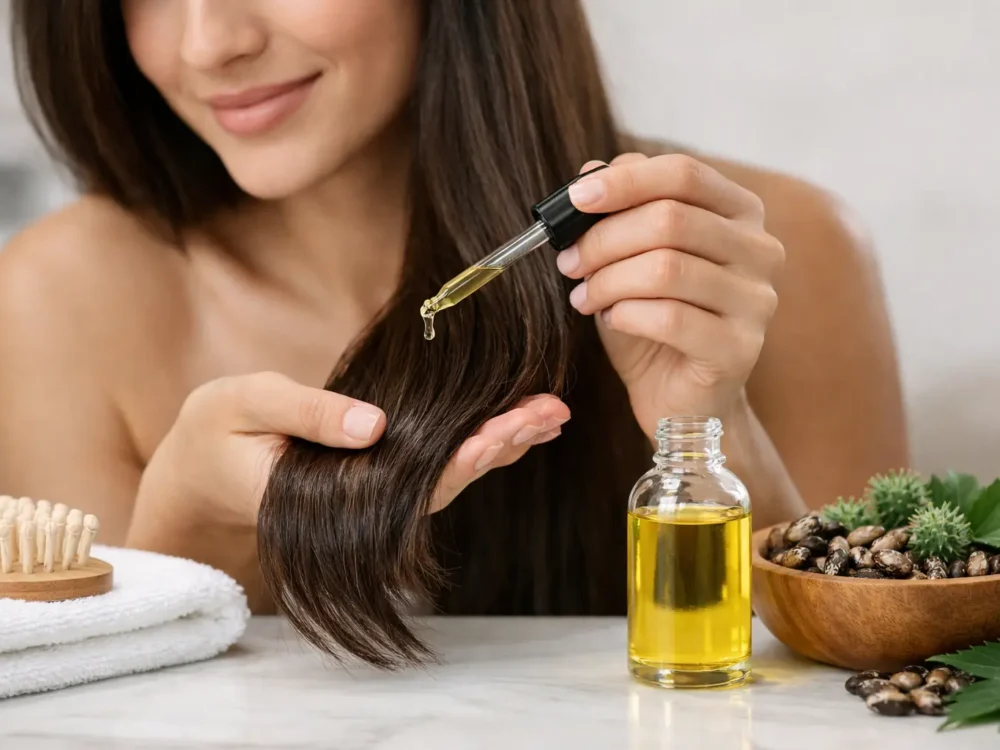
Warm 2 to 4 drops between your palms and smooth them over the mid-lengths and ends. Focus on the oldest, driest parts of your hair rather than the roots. This method helps reduce the rough, brittle feel that shows up after coloring, heat styling, or frequent washing.
Use this sparingly. Castor oil is dense, and once you overapply it, your hair can shift from glossy to greasy fast.
For a pre-shampoo treatment
This is one of the easiest ways to make castor oil practical. Apply a small amount to the scalp and lengths 20 to 30 minutes before washing. It acts like a buffer, which can help hair feel less stripped after shampooing.
For busy routines, this is often the best option. You get the conditioning benefits without committing to an all-night treatment.
Should you mix castor oil with other oils?
Often, yes. Pure castor oil can feel too heavy on its own, especially for straight, fine, or low-density hair. Mixing it with a lighter oil can make it easier to spread and easier to wash out.
Coconut oil is a common choice if your hair tends to feel rough and porous. A lighter carrier oil can also help if you want scalp coverage without the sticky finish. A simple ratio is one part castor oil to one or two parts lighter oil, then adjust based on how your hair responds.
This is where routine matters more than hype. A blend you can comfortably use every week will do more for your hair than a heavy treatment you try once and avoid for the next two months.
How often should you use castor oil for hair?
For most people, one to two times per week is enough. If your hair is coarse, curly, or very dry, you may tolerate it well at that frequency. If your hair is fine, chemically treated, or easily weighed down, once a week or even once every two weeks may be the better starting point.
Your wash routine matters too. If you use castor oil often but do not cleanse thoroughly, buildup can leave the scalp feeling congested and the hair looking dull. Healthy-looking hair is not just about adding moisture. It is also about keeping the scalp clean and the strands balanced.
How to apply castor oil without making a mess
The easiest way is to use less than you think you need. Start with a few drops per section instead of pouring it directly from the bottle. Massage it in slowly and stop once the scalp looks lightly coated.
If you are treating lengths, apply from the ears down and avoid the crown unless your hair is especially dry. Then tie your hair up, leave the treatment on, and shampoo twice if needed. That second cleanse is not overkill with thick oils. It is often what keeps your hair soft instead of waxy.
If you want a cleaner routine, an organic, cold-pressed castor oil with a straightforward ingredient profile is the better choice. Products positioned around purity, cruelty-free standards, and everyday usability tend to fit more smoothly into a modern wellness routine than complicated blends with extra fillers.
Common mistakes when using castor oil for hair
The biggest mistake is overusing it. More oil does not automatically mean better results. Too much can leave residue on the scalp, flatten volume, and make your hair harder to style.
Another common issue is expecting instant growth. Castor oil is usually better thought of as a support product. It can help hair look shinier, feel softer, and stay protected from dryness-related breakage. That can contribute to better length retention over time, but it is not the same as guaranteed rapid growth.
Skipping patch testing is another one. Even natural oils can irritate sensitive skin. Test a small amount before your first full application, especially if you have a reactive scalp.
Who benefits most from castor oil?
People with dry, textured, or overprocessed hair often get the most noticeable payoff. If your hair loses moisture quickly, frizzes easily, or feels brittle after washing, castor oil can help seal things in and improve softness.
It can also work well for anyone trying to protect edges, baby hairs, or weak spots around the hairline from mechanical damage. In these cases, a tiny amount used consistently is usually more useful than heavy occasional treatments.
If your hair is very fine or naturally oily, castor oil still can work, but the method needs adjusting. Think short pre-wash treatment instead of leave-in, and think small amounts instead of full saturation.
A simple weekly routine that actually feels sustainable
A practical routine looks like this: once a week, apply a small amount of castor oil to the scalp and massage for a few minutes. Smooth a little through the ends if they are dry. Leave it on for 30 minutes, then shampoo thoroughly and follow with conditioner.
On non-wash days, use only 1 to 2 drops on dry ends if needed. That is enough to add shine and reduce that crispy, overworked look without turning your hair limp.
For shoppers who want a cleaner, more routine-friendly option, Sterling Nutrition offers organic castor oil designed to fit naturally into everyday wellness habits. That kind of simplicity matters because hair care only works when it is easy enough to repeat.
How to know if it is working
Look for small, real-world signs. Your hair may feel softer after washing, your ends may look smoother, and you may notice less breakage during detangling or styling. Your scalp may also feel better when oiling is paired with regular cleansing and gentle massage.
Give it time. Hair routines are rarely about dramatic overnight changes. They are about stacking good habits until your hair starts behaving like it is better cared for.
If castor oil suits your hair, it usually proves itself quietly – less snapping, more softness, and a little more shine every week you stay consistent.