Currently Empty: $0.00


You’ve probably seen it on a label or product page: “High Thymoquinone (TQ).” Then the next question hits – high compared to what, and how much does the thymoquinone percentage actually matter when you’re just trying to build a simple daily routine?
If you’re shopping for black seed oil for consistency (softgels, a daily spoon, or a quick add-on to your stack), thymoquinone percentage is one of the few numbers that can genuinely help you compare options. It’s not the only thing that matters, and it’s not a magic score. But it is a meaningful quality signal when it’s measured and disclosed correctly.
What thymoquinone is and why the percentage shows up
Thymoquinone is a naturally occurring compound found in Nigella sativa (black seed). It’s widely studied and often treated as a “signature” active in black seed oil, which is why brands highlight it.
When you see a thymoquinone percentage, it’s typically referring to how much thymoquinone is present in the oil by weight, most often reported as a percent or sometimes as mg per gram (mg/g). In plain terms, it’s a potency marker – similar to how you might look at curcumin content in turmeric extracts.
That said, black seed oil is not a single-ingredient chemical. It’s a complex mix of fatty acids and plant compounds, and different batches can vary. The percentage is a helpful anchor, but it lives inside a bigger picture: how the oil was made, stored, and tested.
What “thymoquinone percentage black seed oil” actually means
The phrase “thymoquinone percentage black seed oil” is basically a shopper’s shorthand for: “How strong is this black seed oil, and can I trust the number?”
Most of the time, the percent is a concentration claim tied to lab testing. For example, if a black seed oil lists 1% thymoquinone, that’s roughly 10 mg of thymoquinone per gram of oil. If it lists 2%, that’s about 20 mg per gram. The math isn’t complicated, but the measurement and honesty behind the number is where things get real.
A few nuances matter:
First, some products list thymoquinone for the oil itself, while others list it per serving. If you’re comparing a teaspoon serving to a softgel serving, you want to confirm what the unit is.
Second, the value can be presented as a “minimum” (for example, “at least X% TQ”). That can be a stronger promise than a single batch value because it implies ongoing standardization.
Third, if the label is vague (no percent, no mg/g, no test method, no batch verification), you’re mostly buying marketing.
What range of thymoquinone percentages should you expect?
There’s no one “correct” percentage. Different oils can be perfectly legitimate at different strengths. The right range depends on what you want from the product and how you plan to take it.
Many everyday black seed oils on the market land in a lower-to-mid range, while “high TQ” products position themselves with clearly higher concentrations. If you’re the type of buyer who wants to take a smaller amount consistently, a higher thymoquinone concentration can be appealing because you may get more thymoquinone per serving.
But strength isn’t automatically better for every person. Higher concentration can mean a more intense taste for liquid oils, and some people prefer to start lower and build tolerance, especially if they’re stacking multiple supplements.
The practical takeaway: use the percentage to compare products in the same format and serving size, then choose a strength you can realistically stick with.
How thymoquinone is tested (and what “tested” should mean)
A thymoquinone claim is only as good as the testing behind it. The most credible approach is batch testing with a documented result tied to the specific lot you’re buying.
If a brand simply says “tested” without any specifics, it leaves a lot of room for interpretation – maybe they tested once a year, maybe they tested raw material but not the finished oil, or maybe the result isn’t for the batch currently on shelves.
When you’re evaluating credibility, look for a few signals in the way the claim is presented:
A clear numeric concentration (percent or mg/g), a batch or lot reference, and language that suggests the number is based on a lab result rather than a general statement.
Even when testing is real, thymoquinone can fluctuate. Harvest conditions, seed origin, extraction method, and storage all influence final levels. That’s why “standardized high TQ” is a stronger idea than “this one time we got a high number.”
Extraction and handling: why two oils with the same % can feel different
Two products can share a similar thymoquinone percentage and still perform differently in a routine. That’s because thymoquinone is one piece of the oil’s full composition and stability.
Cold-pressed vs other extraction methods
Cold-pressed black seed oil is popular because it aligns with “clean” processing expectations and tends to feel like a traditional wellness staple. Other methods may push yield or alter the oil profile. Neither is automatically “bad,” but if your buying priorities lean toward minimal processing, cold-pressed is usually the easier match.
Freshness and oxidation
Like other plant oils, black seed oil can oxidize over time. Oxidation can affect taste and overall quality, regardless of how high the thymoquinone number looked at bottling.
This is where storage matters more than most people admit. Dark bottles, controlled temperature, and reasonable shelf life practices help protect the oil. If you buy in bulk because a bundle deal is tempting, make sure you’ll use it while it’s still fresh.
Format changes the experience
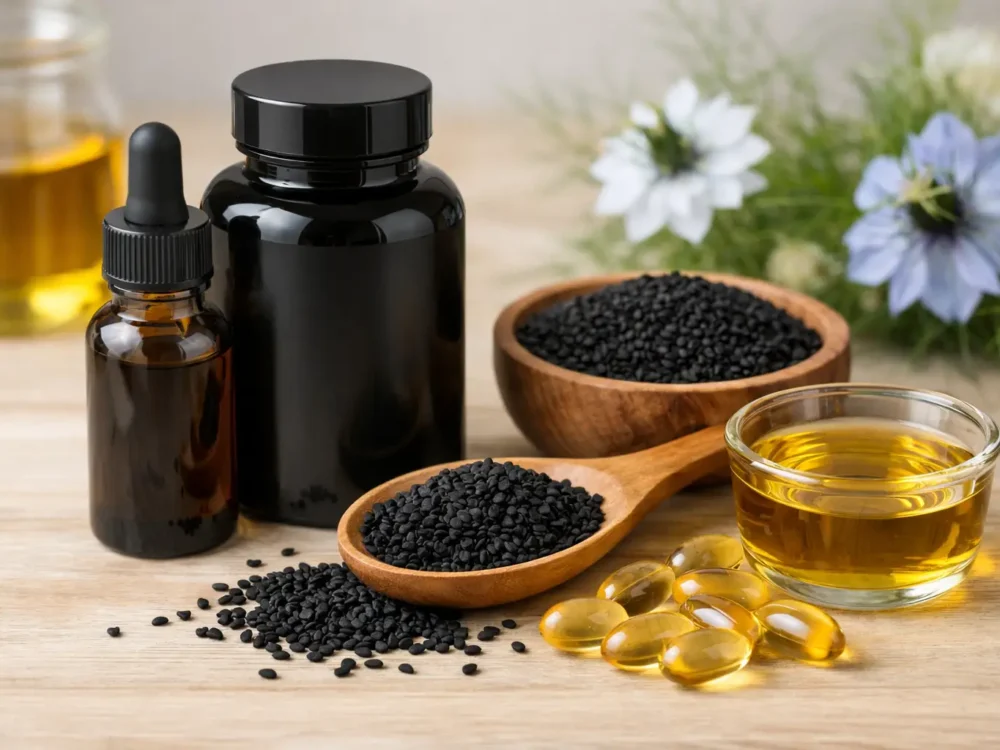
A liquid oil can be flexible (you can adjust the amount), but the taste is real. Softgels are the opposite: less sensory friction, easier to take daily, and more consistent for travel and busy workdays.
The thymoquinone percentage matters in both formats, but the “best” choice is often the one you’ll actually take.
How to choose the right thymoquinone percentage for your routine
Instead of chasing the highest possible number, match the strength to your use case.
If you’re new to black seed oil, a moderate thymoquinone percentage can be a smooth entry point. You can focus on habit-building first: pick a time of day, pair it with an existing routine like breakfast or post-workout hydration, and keep it simple.
If you’re already consistent and you want to streamline, a higher thymoquinone percentage can make sense. Many people go this direction when they want fewer capsules, a smaller spoonful, or a more “concentrated” daily ritual.
If you’re sensitive to strong flavors or you’re already taking multiple supplements, softgels plus a clear thymoquinone claim can be the most practical setup. It removes guesswork and reduces the chance that the product ends up unused in the cabinet.
And if your goal is broad wellness support rather than a targeted protocol, it can be smarter to prioritize clean-label quality, freshness, and consistency over chasing a higher percentage.
Red flags and hype traps to avoid
Thymoquinone percentage can clean up the shopping experience, but it also creates new ways for brands to overhype.
Be cautious if you see a huge thymoquinone claim with no explanation of how it’s measured, or if the product avoids giving a concrete number and leans on vague phrases like “maximum strength.” Also watch for confusing serving math that makes the concentration look bigger than it is.
Another common trap is treating thymoquinone like the only thing that matters. If the oil is poorly stored, old, or low quality in other ways, a single number won’t save it.
A clean way to compare products quickly
If you want a fast, no-drama comparison method, keep it to three checks.
First, confirm the thymoquinone amount is stated clearly (percent or mg/g) and that it’s for the oil you’re actually buying.
Second, compare the concentration against serving size and format. One softgel versus one teaspoon is not a fair comparison unless you translate it to total thymoquinone per serving.
Third, sanity-check the quality cues you already care about: clean ingredients, clear sourcing or manufacturing standards, and packaging that protects the oil.
If you want a straightforward starting point, Sterling Nutrition’s high thymoquinone black seed oil options are built around that “clear number, clean routine” approach at https://sterlingnutrition.sg.
The bottom line: use the percentage, don’t worship it
Thymoquinone percentage is a useful filter, especially online where you can’t taste or smell the oil before buying. It can help you avoid weak, vague products and pick something that fits your schedule, whether that’s softgels for consistency or a liquid oil for flexibility.
The best choice is the one that feels clean, is transparently measured, and is easy enough to take that you don’t have to rely on motivation to stay consistent.