Currently Empty: $0.00


You finish a sweaty workout, chug a big bottle of water, and still feel flat, crampy, or oddly tired an hour later. That is usually the moment people ask when should you take electrolytes – and the real answer is not “all the time.” It depends on how much fluid and minerals you are losing, how long you are active, the weather, and what your day actually looks like.
Electrolytes are minerals like sodium, potassium, magnesium, and calcium that help regulate hydration, muscle function, and nerve signaling. When you lose them through sweat, illness, or long periods without enough food and fluids, plain water may not be enough to help you feel your best. But that does not mean every bottle of water needs a tablet or capsule.
When should you take electrolytes during the day?
The best time to take electrolytes is when your body is losing more fluid and minerals than usual or when you need help holding onto the water you drink. For many people, that means before or during long workouts, after heavy sweating, during travel, after a stomach bug, or on especially hot days.
If your day is fairly routine, you are eating balanced meals, and you are not sweating heavily, you may not need extra electrolytes at all. Water and food often do the job. That trade-off matters because more is not always better, especially if your sodium intake is already high.
A simple way to think about it is this: electrolytes make more sense when hydration needs go beyond basic thirst. They are a tool for performance, recovery, and fluid balance, not a mandatory add-on for every healthy adult.
The most common times electrolytes help
Before a workout
Taking electrolytes before exercise can help if you are training in the heat, doing endurance sessions, or starting your workout already a little dehydrated. This is especially useful for runners, cyclists, gym-goers doing long sessions, and anyone exercising outdoors in humid weather.
A pre-workout electrolyte drink or effervescent tablet can support hydration going in, rather than waiting until you are already drained. If your workout is short, indoors, and low sweat, water is often enough.
During exercise
This is one of the clearest answers to when should you take electrolytes. If you are exercising for more than 60 minutes, sweating heavily, or training in hot conditions, electrolytes can help maintain performance and reduce that washed-out feeling that sometimes hits halfway through a session.
Sodium is especially important here because it helps your body retain fluid. If you are only sipping plain water during a long, sweaty workout, you may be replacing fluid without replacing enough minerals.
After heavy sweating
Post-workout electrolytes can make sense when you finish drenched, especially after intense cardio, outdoor sports, hot yoga, or physically demanding work. The goal is not just to drink more, but to rehydrate more effectively.
If you lose only a light amount of sweat, a regular meal and water may cover your needs. But if your shirt is soaked, your energy drops fast, or you are prone to headaches after training, recovery electrolytes are worth considering.
In hot weather or high humidity
You do not need to be an athlete to benefit from electrolytes. On very hot days, especially in humid climates, your sweat losses can climb quickly just from walking, commuting, or being outdoors.
That makes electrolytes useful for busy professionals, parents, and anyone spending time outside. If you are sweating more than usual and plain water does not seem to help, adding electrolytes can be a practical upgrade.
During illness
If you are dealing with vomiting, diarrhea, fever, or poor appetite, electrolytes are often more useful than plain water alone. In those situations, fluid and mineral losses can happen quickly.
This is one of the times electrolytes are less about performance and more about basic recovery. If symptoms are severe, persistent, or you cannot keep fluids down, medical advice matters more than any supplement routine.
During travel
Flights, time zone changes, heat exposure, alcohol, and disrupted meals can all leave you feeling dehydrated. Travel is one of the most overlooked times to use electrolytes because the dehydration is often mild but noticeable – dry mouth, fatigue, headaches, and that sluggish post-flight feeling.
A convenient capsule or tablet format works well here because it is easy to pack and easy to use consistently.
While fasting or eating very low carb
Some people notice headaches, fatigue, or low energy when fasting or reducing carbs sharply. Part of that can come from shifts in fluid balance and sodium loss. In that setting, electrolytes may help you feel more stable.
That said, context matters. If you have a medical condition, take blood pressure medication, or are following a restrictive diet for health reasons, it is smart to check whether extra sodium or potassium is appropriate for you.
Signs you may need electrolytes
Your body usually gives a few clues. Heavy sweating is the obvious one, but it is not the only sign. You may benefit from electrolytes if you often feel weak after long workouts, get headaches in the heat, notice muscle cramps, feel unusually tired after sweating, or find that water alone does not seem to “stick.”
Dark urine, dizziness, dry mouth, and post-exercise fatigue can also point to hydration issues, though they are not exclusive to electrolyte loss. This is where being honest about your routine helps. A 20-minute walk in air conditioning is different from a 90-minute run outdoors.
When plain water is enough
Electrolytes are useful, but they are not always necessary. If you are doing light activity, eating regular meals, and not sweating heavily, water is usually enough for day-to-day hydration.
This matters because the wellness space can make every product sound essential. It is better to match your hydration strategy to your actual needs. For a desk-based day with normal meals and minimal sweat, there is no big advantage in forcing extra electrolytes.
When should you take electrolytes for workouts?
For workouts, timing depends on duration and sweat loss. If you are training hard for over an hour, taking electrolytes before and during exercise often works best. If your session is shorter but extremely sweaty, taking them after can still be helpful.
A practical approach is to use them before a long workout if you know you are prone to fatigue, during if you are sweating steadily, and after if recovery feels harder than it should. You do not need all three every time. The right choice is the one that matches the session.
How to choose the right moment
Think about three things: how long you are active, how much you sweat, and how quickly you need to recover. That gives you a better answer than chasing a fixed rule.
If you are doing a quick gym session before work, water may be enough. If you are playing tennis outdoors at noon, electrolytes make more sense. If you are recovering from a stomach bug, they may be the better choice even without exercise.
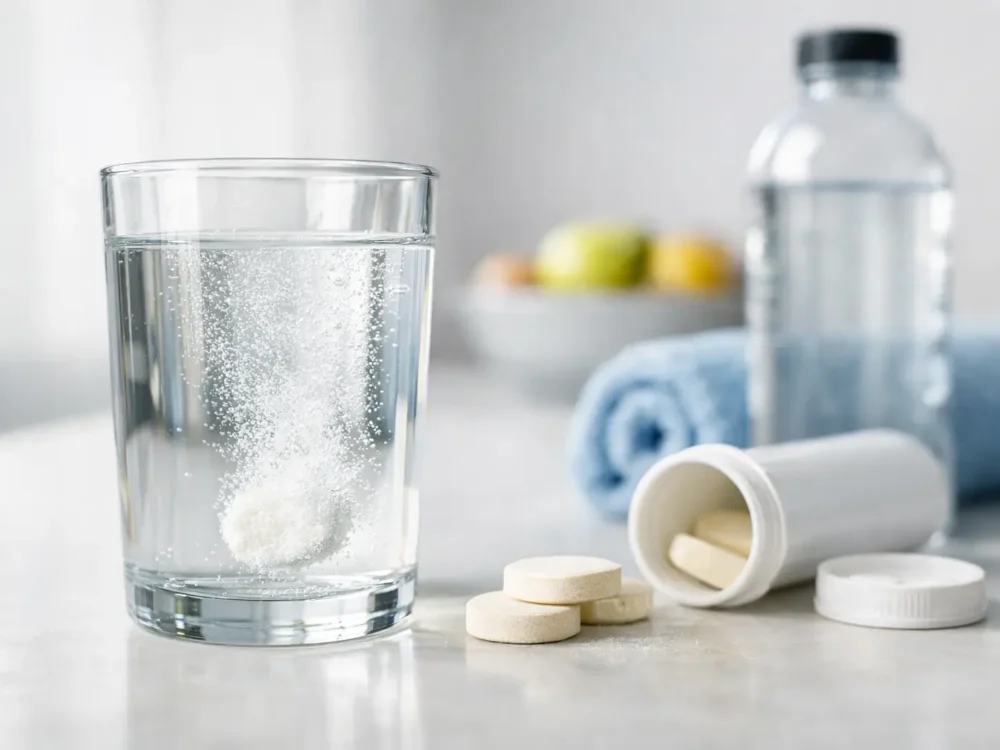
Convenience matters too. Capsules are easy when you want a no-fuss option on the go. Effervescent tablets can be more appealing if you drink more when it tastes better. The best format is the one you will actually use consistently when the need is real.
A few situations where you should be careful
If you have kidney disease, heart disease, high blood pressure, or take medications that affect fluid balance or potassium levels, do not assume electrolytes are harmless. Some formulas are high in sodium, some contain potassium, and both can matter depending on your health status.
It is also possible to overdo it. If you are taking electrolyte products several times a day without heavy sweat losses, you may simply be adding minerals you do not need. More is not automatically better hydration.
The smarter way to use electrolytes
The best electrolyte routine is not complicated. Use them strategically, not automatically. Reach for them when sweat loss is high, recovery matters, travel throws you off, or illness drains you faster than water alone can help.
For many people, that targeted approach feels better and makes more sense than treating electrolytes like an everyday requirement. If you want hydration support that fits real life, simple formats and clean ingredients can make it easier to stay consistent without overthinking it – which is exactly where a brand like Sterling Nutrition fits best.
The goal is not to drink electrolytes nonstop. The goal is to know when your body will genuinely benefit from them, and respond before dehydration starts dragging your day down.