Currently Empty: $0.00

If you are deciding between black seed oil vs softgels, the real question is not which one is universally better. It is which format you will actually use every day. For most people, consistency matters more than theory. A premium black seed product only helps if it fits your routine, your taste tolerance, and your budget.
That is why this comparison matters. Black seed has a long history in wellness, but modern shoppers are not looking for tradition alone. They want clean ingredients, simple dosing, and a format that works before work, after the gym, or in the middle of a busy day. The choice between liquid oil and softgels usually comes down to practicality.
Black seed oil vs softgels: the core difference
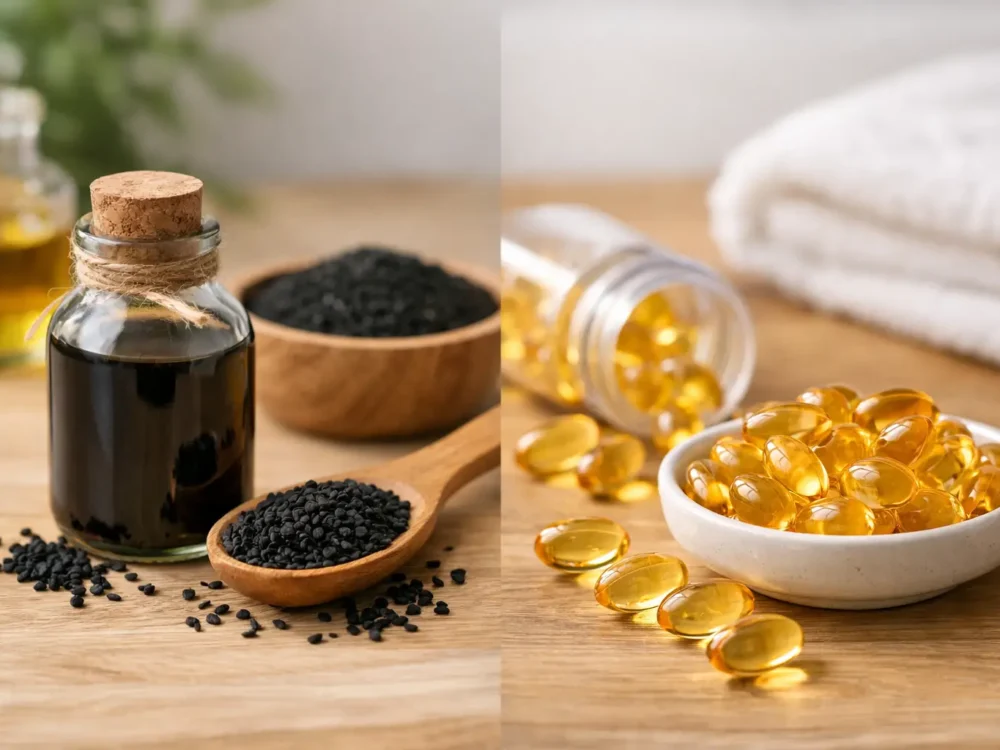
Both forms are built around the same ingredient family, typically oil pressed from Nigella sativa seeds. The biggest difference is delivery. Liquid black seed oil comes in a bottle and is taken by spoon or mixed into food or drinks. Softgels package that oil into pre-measured capsules.
On paper, that sounds like a small distinction. In daily life, it changes almost everything. Taste, portability, dose control, storage habits, and the overall user experience are all different.
Liquid oil usually appeals to people who want the most direct format. They may enjoy adjusting their serving size, checking the oil’s texture, or using it in more flexible ways. Softgels appeal to people who want convenience without the strong taste and smell. If your supplement routine already includes capsules, softgels often feel easier from day one.
Taste is the dealbreaker for many people
Let’s start with the factor that pushes most shoppers one way or the other. Black seed oil has a distinct taste. Some describe it as peppery, bitter, earthy, or slightly pungent. Others do not mind it at all. But for many first-time users, the flavor is stronger than expected.
If you are highly sensitive to taste, softgels have an obvious advantage. You get the oil without having to experience it directly. That can make long-term use far more realistic, especially if you have tried liquid oils in the past and quit after a week.
Liquid still has its place. Some users prefer the ritual of taking oil by the spoonful, and some feel more confident when they can see the product itself. But if taste has been your barrier to consistency, softgels solve a real problem instead of creating another one.
Convenience and routine adoption
This is where softgels usually pull ahead for busy adults. A bottle of oil often stays at home. You measure it, wipe the bottle, and remember to refrigerate it if the label calls for that after opening. None of this is difficult, but it adds friction.
Softgels are cleaner and faster. You can keep them at your desk, in your gym bag, or in your travel pouch. There is no spoon, no mess, and no lingering aftertaste. If your schedule changes daily, that convenience matters.
This is also why modern supplement brands keep investing in capsule and softgel formats. People do not just buy ingredients. They buy compliance. A product that fits real life tends to win.
For shoppers who value structure and repeatability, softgels often make the routine feel automatic. That matters more than people think. Wellness habits usually fail because they are inconvenient, not because the person lacks motivation.
Black seed oil vs softgels for dosing
Dosing is one area where each format has a different strength.
Liquid oil gives you flexibility. If you want to take a smaller amount at first or adjust over time based on the product label and your personal routine, a bottle gives you that room. Some experienced users prefer that level of control.
Softgels give you precision. Each serving is pre-measured, which removes guesswork. That is useful if you want a simple routine and do not want to measure by teaspoon every morning. It is also helpful for households where more than one person uses the product and everyone wants the same amount.
There is a trade-off, though. If you prefer very customized serving sizes, softgels are less flexible. You follow the serving format set by the product. For many people, that is a feature, not a drawback.
Absorption and effectiveness: is one better?
This is where the conversation can get oversimplified. Many shoppers assume liquid must be more effective just because it is less processed in appearance. Others assume softgels are equal in every case. The truth is more practical.
A high-quality black seed oil in either format can be effective if the raw material and manufacturing standards are strong. Purity, freshness, extraction method, and active compound profile matter more than whether the oil arrives by spoon or capsule. If a product emphasizes quality markers such as clean sourcing, non-GMO standards, or specific thymoquinone content, that often tells you more than format alone.
Softgels may have a slight edge for users who would otherwise skip liquid oil due to taste or inconvenience. A product only works when it is used consistently. From that perspective, the “better” option is often the one you can stick with for months, not days.
Shelf life, storage, and product experience
Liquid oils can be more sensitive to heat, light, and air exposure after opening. That does not make them a bad choice, but it does mean storage habits matter. If you buy a bottle and leave it in the wrong spot, you may not be protecting the product as well as you think.
Softgels tend to feel easier to manage. The oil is enclosed, portions are separated, and the product experience is generally more stable from one serving to the next. For shoppers who want a low-maintenance format, this can be a strong advantage.
There is also the issue of travel. Liquid oils are less practical on flights, in office settings, or during weekend trips. Softgels are clearly more portable. If your wellness routine moves with you, portability becomes part of product quality.
Cost and value are not always the same thing
At first glance, liquid black seed oil can sometimes look more cost-effective per bottle. But value is not just about sticker price. It is about how much of the product gets used consistently, correctly, and without waste.
If you buy liquid oil and dislike the taste, the lower price does not help. If you forget to take it because the routine is annoying, that is not value either. On the other hand, if you already enjoy liquid oils and want a more flexible serving format, paying extra for softgels may not make sense.
The better question is this: which format gives you the highest chance of daily use? For many people, especially busy professionals and fitness-minded shoppers, softgels deliver better real-world value because they reduce friction.
Who should choose liquid black seed oil?
Liquid oil is often the better fit if you are comfortable with bold flavors, want serving flexibility, and prefer a more traditional format. It can also make sense if you enjoy adding oils into your wider wellness routine and do not mind a little extra handling.
It may appeal to ingredient-focused shoppers who want to see the oil directly and compare color, aroma, and texture across batches. That hands-on experience is part of the appeal for some users.
Who should choose black seed softgels?
Softgels are usually the smarter pick if you want ease, consistency, and a format that fits modern routines. They are especially useful for people who travel, work long hours, or already take daily supplements. If taste is your main concern, this is likely the easiest decision you will make.
They also fit shoppers who prefer clean-label convenience. A well-made softgel offers the traditional ingredient in a more practical format, which is exactly what many wellness customers want now. Brands like Sterling Nutrition have leaned into this shift for a reason. The format removes common barriers without losing the core appeal of the ingredient.
What to check before you buy either one
No matter which format you choose, quality should lead the decision. Look beyond marketing language and focus on what actually matters: ingredient clarity, purity cues, extraction quality, and whether the brand communicates its standards clearly. Claims like organic, vegan, cruelty-free, or non-GMO can be useful signals when they align with your priorities, but they should sit alongside real product transparency.
It also helps to think about your personal routine before purchasing. Be honest. Are you the kind of person who will measure oil every day without fail, or do you need a grab-and-go option? The best supplement plan is the one you can repeat without negotiation.
If you are stuck between the two, softgels are often the safest starting point. They lower the commitment barrier, especially for first-time users. Once you know black seed fits your routine, you can always explore liquid later.
The smartest choice is not the most traditional or the most hyped. It is the format that feels easy enough to become part of your everyday life.