Currently Empty: $0.00

Some supplements look great on paper and still fail one simple test – will you actually take them every day? That is where the softgels vs liquid supplements question gets practical fast. The better format is usually the one that fits your routine, your taste preferences, and the ingredient itself.
For busy adults, consistency often matters more than supplement theory. A liquid may seem more flexible, while a softgel may be easier to keep by your desk, in your gym bag, or next to your toothbrush. If your goal is daily wellness support without turning your routine into a project, the format deserves more attention than it usually gets.
Softgels vs liquid supplements: the real difference
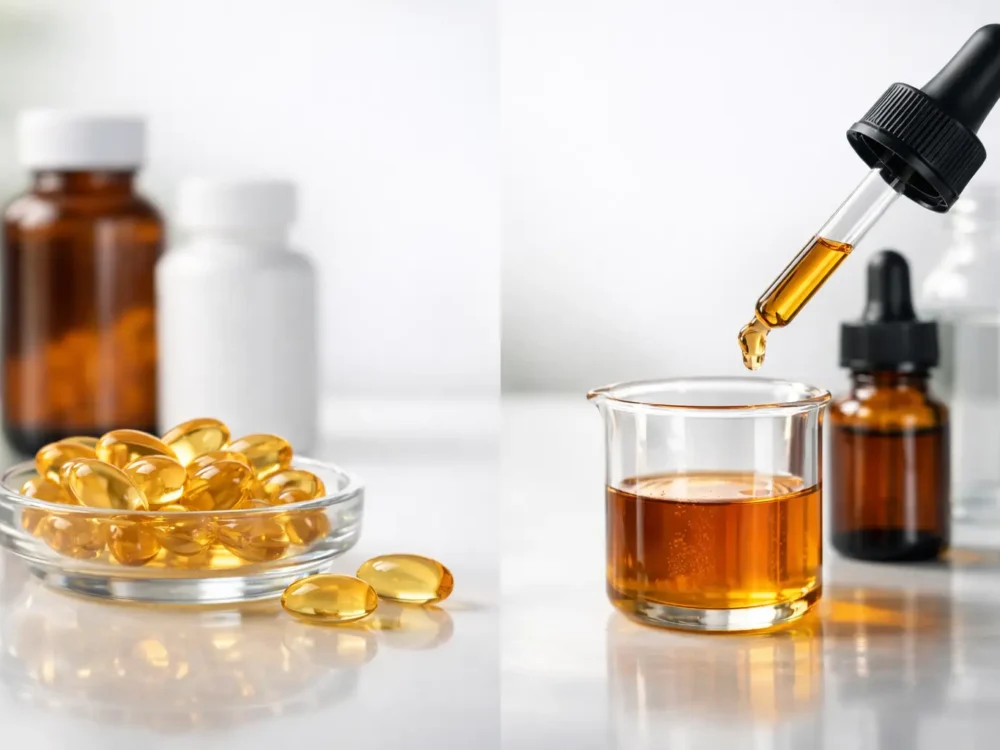
At a basic level, both formats deliver active ingredients. The difference is how they are packaged, measured, and experienced. Softgels usually contain oils or dissolved ingredients sealed in a smooth capsule shell. Liquid supplements come in bottles, often taken by spoon, dropper, or mixed into water.
That sounds simple, but the user experience is very different. Softgels are built for precision and convenience. Liquids are built for flexibility and, in some cases, higher-volume dosing. Neither format is automatically better in every case.
If you are comparing two versions of the same ingredient, the right choice depends on what you value most: speed, portability, taste, dosage control, or shelf-life after opening.
Absorption is important, but context matters
A lot of supplement shoppers assume liquids always absorb better. Sometimes they do feel faster, especially if the ingredient is already dissolved and the dose is taken directly. But faster is not always meaningfully better.
With softgels, the shell breaks down in the digestive system and releases the contents for absorption. For oil-based ingredients, this can be a very effective delivery format. Black seed oil is a good example. Putting an oil into a softgel can make daily use much cleaner and more consistent without necessarily sacrificing practicality or performance.
The bigger issue is usually bioavailability of the ingredient itself, not just whether it comes in a bottle or a capsule. Fat-soluble compounds, water-soluble compounds, emulsified formulas, and highly concentrated extracts all behave differently. That is why broad claims like liquid is always superior or softgels are always more effective tend to miss the point.
If your supplement contains an oil, softgels often make strong sense. If you need adjustable serving sizes or a formula designed specifically for liquid use, a bottle may be the better fit.
Taste can make or break compliance
This is the part many brands gloss over, but real customers do not. If a supplement tastes sharp, earthy, bitter, or oily, there is a good chance it will sit unopened after the first week.
Liquids can be challenging here. Some wellness staples have naturally strong flavors and aromas. That may be fine for people who are used to traditional remedies, but not everyone wants their morning routine to come with a sensory challenge. Even if the ingredient is excellent, unpleasant taste can quietly reduce long-term consistency.
Softgels remove most of that friction. No measuring, no aftertaste, no oily spoon, and no need to mix anything into a drink. For anyone trying to stay consistent during hectic workdays or travel, that ease matters.
This is one reason convenience-focused wellness brands continue to invest in softgel formats. They make traditional ingredients easier to use in modern routines, which is exactly what many shoppers want.
Convenience is where softgels usually pull ahead
For everyday use, softgels are hard to beat. They are pre-measured, portable, and clean. You can keep them in a cabinet, toss them into your bag, and take them in seconds. There is very little setup and almost no mess.
Liquids require more effort. You may need to shake the bottle, measure the dose, refrigerate after opening, or clean a spoon or dropper. That is manageable at home, but less convenient at the office, after a workout, or while traveling.
This does not mean liquids are inconvenient for everyone. If you already use oils at home, or prefer adding supplements into smoothies or water, the bottle format may feel natural. But for many people, especially those building a simple repeatable routine, softgels are the more realistic choice.
Convenience is not a minor factor. It is often the reason a supplement becomes part of your life instead of another half-used product in the kitchen.
Dosing flexibility favors liquids
Where liquids often win is dosage flexibility. You can start small, adjust intake gradually, or use a different amount based on your needs and professional guidance. That can be useful when a supplement does not have a one-size-fits-all serving.
Softgels are less flexible because each capsule contains a fixed amount. That is great for precision, but not ideal if you want very small adjustments. You can take one softgel or two, but you cannot usually fine-tune as easily as you can with a measured liquid.
For first-time users who want to ease into a stronger-tasting or concentrated supplement, liquids can offer a gentler path. For people who want zero guesswork, softgels often feel more reassuring.
Stability, freshness, and travel use
Another overlooked factor in softgels vs liquid supplements is what happens after you open the product. Many liquid supplements are more exposed to air, light, temperature changes, and contamination from repeated use. Depending on the formula, that may affect freshness and handling.
Softgels are individually sealed servings, which can help protect the ingredient until you take it. That format also tends to be more travel-friendly. You are not packing a bottle that could leak, taking up more space in your bag, or worrying about carrying liquids through airport security.
That said, storage needs vary by product. Some liquids are very stable when handled properly, and some softgels require careful storage away from heat. Reading the label still matters.
Which format works best for oil-based supplements?
For oil-based wellness products, softgels often strike the best balance between convenience and consistency. They contain the oil in a controlled dose and remove the biggest friction points: taste, texture, and measuring.
This is especially appealing for people who want the benefits of traditional oils without the daily ritual of pouring and swallowing them. A clean-label softgel can make a potent ingredient feel far more approachable.
Liquid oils still have a place. Some people prefer them for higher-volume use, direct mixing, or household versatility. Coconut oil and castor oil are obvious examples where a bottle makes sense because the product may be used in more than one way. But when the goal is simple oral supplementation, softgels are often the more modern fit.
How to choose without overthinking it
If your biggest barrier is taste, choose softgels. If your biggest barrier is remembering to take your supplements, choose the format that is easiest to keep in sight and use quickly. If dosage flexibility matters most, liquids deserve a closer look.
It also helps to think about your actual day, not your ideal day. Are you measuring out a liquid before your 8 a.m. call every morning? Are you carrying a bottle in your gym bag? Are you likely to keep up that effort for months, not just a few motivated days?
For many shoppers, the answer points back to convenience. That is why practical wellness brands like Sterling Nutrition put so much focus on easy-to-use formats. Clean ingredients matter, but format is what turns product quality into repeat behavior.
The better supplement is the one you will use
There is no universal winner in softgels vs liquid supplements. Liquids offer flexibility and can suit certain formulas well. Softgels offer precision, portability, and a much easier daily experience, especially for oil-based ingredients or strong-tasting remedies.
A smart supplement routine should feel sustainable, not aspirational. Choose the format that matches your habits, your tolerance for taste, and the reality of your schedule. The best results usually start there.