Currently Empty: $0.00

Black seed oil sounds simple until you start shopping for it. One bottle says cold-pressed, another says high thymoquinone, a third pushes softgels for convenience, and suddenly the question is not whether to buy it – it’s how to choose the best black seed oil supplement for your routine.
If you want a product you’ll actually take consistently, the answer usually comes down to three things: potency, purity, and format. The strongest-looking label is not always the smartest buy, and the cheapest option can end up being the least practical if the taste, smell, or serving size makes daily use harder than it should be.
How to choose the best black seed oil supplement
The first filter is what the supplement is actually made from. Black seed oil comes from Nigella sativa seeds, but product quality can vary a lot depending on extraction method, seed sourcing, and whether the brand standardizes for active compounds. If a label gives you no real detail beyond “black seed oil,” that is usually a sign to slow down.
One of the most useful markers to look for is thymoquinone, often shortened to TQ. This is one of the best-known naturally occurring compounds in black seed oil, and many shoppers specifically seek higher-TQ formulas for a more concentrated product. That does not automatically make every high-TQ supplement better for every person, though. A stronger formula may be appealing if you want a premium option, but it also makes label transparency more important. You want a brand that tells you what you are getting, not one that relies on vague wellness language.
Cold-pressed extraction also matters. In general, cold-pressed oils are favored because they help preserve the seed’s natural profile without the harsher processing that can come with some extraction methods. For shoppers who care about clean-label products, this tends to fit better with the broader goal: less unnecessary processing, more clarity.
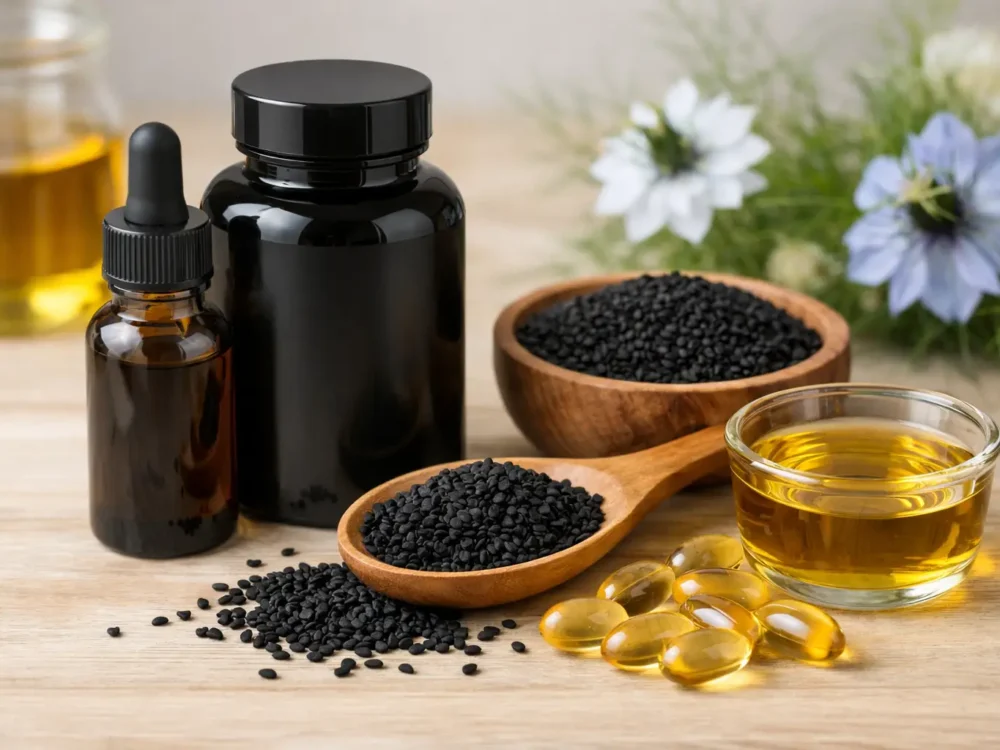
Then there’s format. Liquid black seed oil has a traditional appeal, but it is not always the easiest fit for busy routines. The taste is bold and peppery, and some people simply won’t stick with it long term. That’s where softgels can make a real difference. If you travel often, work long hours, or already take supplements with breakfast or after the gym, softgels are often the more realistic option.
What makes a black seed oil supplement worth buying
The best black seed oil supplement should do more than sound impressive on the front label. It should show clear quality signals that reduce guesswork.
Purity markers are a strong place to start. Many wellness shoppers now actively look for non-GMO, vegan, cruelty-free, organic, or natural-ingredient claims because these cues help narrow the field quickly. They do not replace product performance, but they do tell you something about the brand’s standards and who the product is designed for.
You should also look at serving practicality. Some products look affordable until you realize the serving size is large or the bottle runs out quickly. Others are priced higher but offer a better everyday experience and more consistent use. If a supplement is unpleasant enough that you skip it, value disappears fast.
Packaging can also tell you a lot. Oils are sensitive, so quality packaging matters for freshness and stability. If the product gives no indication that the oil is being protected properly, that is worth noticing. The goal is not to overcomplicate the shopping process, but to avoid being swayed by branding alone.
Liquid vs softgels: which best black seed oil supplement format fits you?
This is where personal routine matters more than hype. Liquid black seed oil may suit people who prefer a more traditional format, want flexibility with serving size, or do not mind the strong taste. Some people even mix it into a small amount of juice or take it with food to make it easier.
Softgels are often the better choice for consistency. They are cleaner, easier to carry, and simpler to build into a morning or evening supplement habit. For people who already use capsules, electrolytes, or effervescents as part of a structured routine, softgels usually feel like the lower-friction option.
That trade-off is straightforward. Liquid may feel more traditional, while softgels usually win on convenience. Neither is automatically superior in every case. The best black seed oil supplement for you is the one you will use regularly, not the one that sounds most intense on paper.
Red flags to watch before you buy
A lot of black seed oil products are marketed with broad, feel-good claims that never get specific. That can be a problem. If a brand avoids giving details on extraction, active compounds, or sourcing, you are left filling in the blanks yourself.
Another red flag is overpromising. Black seed oil has a long history of use and a strong wellness following, but no credible product should be presented as a cure-all. Brands that lean too hard into miracle language often weaken trust rather than build it.
It is also worth watching for convenience gaps. A product may look premium, but if the bottle design is messy, the serving method is awkward, or the taste is so harsh that you dread taking it, that becomes a practical issue. Wellness products work best when they fit real life.
Finally, do not ignore reviews entirely. While customer feedback is not the same as product testing, it can reveal patterns around taste, repeat purchase behavior, ease of use, and overall satisfaction. For routine-based supplements, that kind of information can be surprisingly useful.
The quality checklist that matters most
If you want a faster way to sort options, focus on a short list of buying criteria: standardized or clearly stated thymoquinone content, cold-pressed extraction, clean-label quality markers, and a format that matches your schedule.
A good supplement should feel easy to understand. If you need to decode marketing language to figure out what is inside, it is probably not the most shopper-friendly choice. Health-conscious buyers are busy. They want a product that feels premium without making the purchase process harder than necessary.
That is also why modern formats matter. Traditional remedies can absolutely have a place in a current wellness routine, but they need to work with how people actually live now. Convenience is not a shortcut. It is often what makes consistency possible.
For shoppers who want a straightforward option, a high-quality softgel with strong purity signals can be a smart place to start. It removes the taste barrier, simplifies serving, and fits naturally into daily supplement use. For those who prefer oils in their original format, a clean, clearly labeled liquid can still be the right call.
A smarter way to pick the best black seed oil supplement
The best black seed oil supplement is rarely the one with the loudest marketing. It is the one that gives you enough information to buy with confidence and enough convenience to keep using it.
That means looking past generic claims and paying attention to what actually supports daily value: visible quality standards, meaningful potency markers like TQ, and a format that suits your routine instead of complicating it. If you are comparing options online, that combination matters more than flashy packaging or dramatic wellness promises.
For shoppers who want traditional wellness in a modern format, this is where brands that focus on purity and usability stand out. A retailer like Sterling Nutrition, for example, leans into that balance with clean-label positioning and convenience-first formats that make routine adoption easier.
Black seed oil does not need to be complicated. The right product should feel clean, credible, and easy to keep on hand. Buy for consistency first, and the rest of the decision gets much clearer.