Currently Empty: $0.00

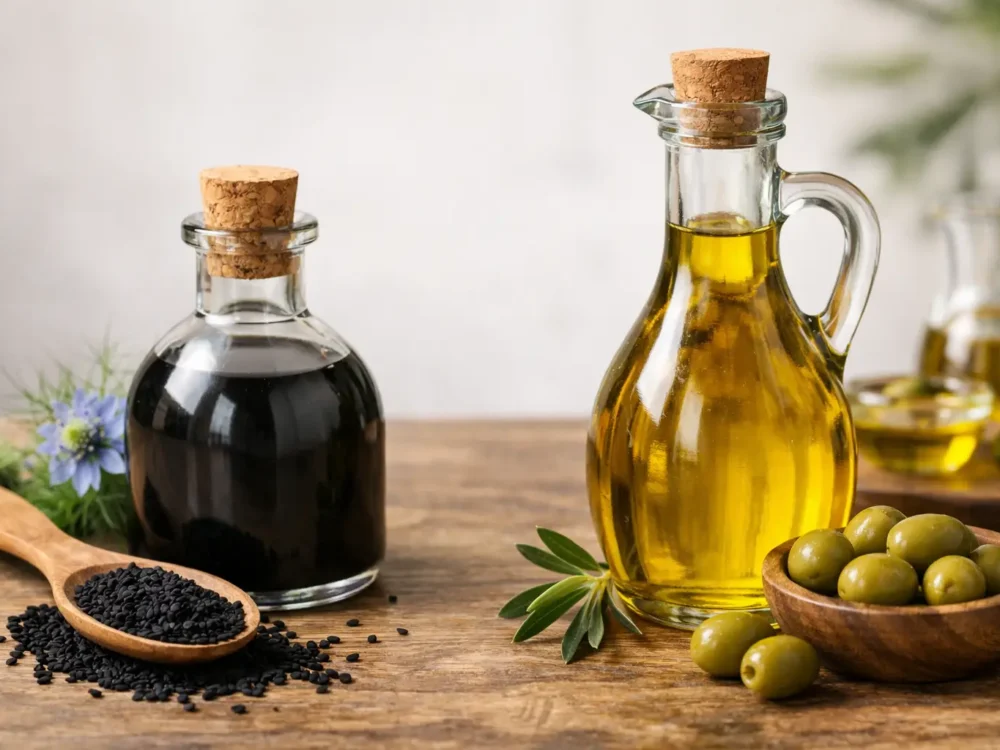
If you are weighing black seed oil vs olive oil, the real question is not which oil is better in some absolute sense. It is which one matches your goal, your routine, and the way you will actually use it consistently. These two oils sit in very different lanes. One is a kitchen staple with broad everyday use. The other is a more targeted wellness oil that people usually take in smaller amounts for specific reasons.
That distinction matters because a lot of comparisons flatten them into the same category. They are both oils, yes, but they differ in flavor, nutrient profile, common serving size, and how most people fit them into daily life. If you want something versatile for salads, sautéing, and heart-healthy fats, olive oil usually leads. If you want a concentrated traditional wellness oil that is often used in teaspoons or softgels, black seed oil deserves a closer look.
Black seed oil vs olive oil: the biggest difference
Olive oil is primarily a food oil. Extra virgin olive oil is prized for its monounsaturated fat content, especially oleic acid, along with antioxidant compounds called polyphenols. It is a core part of Mediterranean-style eating and has strong mainstream recognition for supporting overall cardiovascular health when used in place of less favorable fats.
Black seed oil, by contrast, is typically treated more like a functional wellness supplement. It comes from Nigella sativa seeds and is known for active compounds such as thymoquinone. People do use it in food, but usually in much smaller amounts because the taste is bold and peppery. In practice, many buyers choose black seed oil for targeted wellness support rather than as a daily cooking oil.
So if your goal is broad nutritional utility, olive oil is usually the more natural fit. If your goal is a concentrated traditional remedy-style oil with a more specific wellness identity, black seed oil often makes more sense.
What olive oil does best
Olive oil earns its reputation because it is easy to use every day. You can drizzle it over vegetables, mix it into dressings, toss it with grains, or use it for light to medium-heat cooking depending on the type and quality. That level of convenience is a major advantage because even the most impressive nutrition profile means very little if the product sits untouched in your pantry.
Nutritionally, extra virgin olive oil is best known for monounsaturated fats and polyphenols. That combination is associated with heart-friendly eating patterns and better overall diet quality. It is less about taking olive oil as a remedy and more about using it to improve the fat quality of your meals over time.
There is also a taste advantage. Good olive oil can be grassy, peppery, fruity, or mild, but it is generally much easier to pair with everyday meals than black seed oil. For busy adults who want low-friction wellness habits, that matters.
What black seed oil does best
Black seed oil stands out because it feels more purposeful. People often seek it out for immune support, general wellness, and traditional herbal use rather than for basic meal prep. The active compound most often discussed is thymoquinone, which is one reason high-TQ formulas attract attention from shoppers who want a more concentrated option.
The trade-off is usability. Black seed oil has a strong taste that many people do not love at first try. Some describe it as bitter, peppery, or earthy. That is why convenience formats matter so much. Softgels can be the difference between using black seed oil consistently and giving up after a week.
This is where a modern wellness brand can make the category easier to stick with. Sterling Nutrition, for example, positions black seed oil in routine-friendly formats that suit people who want traditional wellness support without the mess or taste barrier.
Black seed oil vs olive oil for inflammation and antioxidants
This is one of the most common reasons people compare the two. Both oils contain antioxidant compounds, but they are not identical in how they are studied or used.
Olive oil is backed by a large body of nutrition research tied to dietary patterns, especially around heart health and long-term wellness. Its anti-inflammatory reputation is often connected to its polyphenols and its role as a healthier replacement for certain refined fats.
Black seed oil gets attention for thymoquinone and its traditional use in wellness routines. Early and emerging research is interesting, but the evidence base is not as broad or established in mainstream dietary guidance as olive oil. That does not make black seed oil weak. It just means the context is different. Olive oil is a foundational food. Black seed oil is more of a targeted supplement-style addition.
If you are choosing based on general anti-inflammatory eating, olive oil is usually the stronger everyday base. If you want an additional wellness oil with a more specialized profile, black seed oil may complement your routine better.
Which oil is better for cooking?
Olive oil wins this easily for most people.
Extra virgin olive oil is practical, flavorful, and far more pleasant in regular meals. It works in dressings, dips, roasted vegetables, pasta, and many stovetop applications. Refined olive oil can go even further for higher-heat uses, though many shoppers prefer extra virgin for its taste and antioxidant content.
Black seed oil is not the oil most people reach for in cooking. You can use small amounts, but its flavor is intense and can dominate a dish quickly. Heat may also be a concern if you are buying it for its active compounds and want to preserve them as much as possible. In most cases, black seed oil is better used in small servings, taken directly, mixed into a cold preparation, or used in a supplement format.
So if your question is kitchen utility, olive oil is the clear answer.
Black seed oil vs olive oil for skin and hair
Both oils show up in beauty routines, but again, the use case is different.
Olive oil is heavier and more emollient. It can help soften dry skin and add slip to hair, but for some people it may feel greasy or too rich, especially on acne-prone skin or fine hair. It is simple, familiar, and easy to find, which explains why it remains popular in DIY care.
Black seed oil is often chosen for scalp and skin routines because of its traditional reputation and lighter wellness-driven identity. Some people like it for targeted use on the scalp or in blended oils. Still, sensitivity varies. The smell is stronger, and not every skin type will love it.
If you are deciding for topical use, it depends on texture preference and goal. Olive oil is more about moisture and softness. Black seed oil is often chosen for a more targeted, remedy-style approach. Patch testing matters with either one.
Taste, convenience, and daily consistency
This is where many buying decisions are actually made.
Olive oil is easy to adopt because it fits naturally into meals. You do not have to remember a separate step. You just cook or dress your food with it. That makes consistency almost automatic.
Black seed oil usually requires more intention. You may take a spoonful, add a small amount to a cold drink, or use softgels. If the taste bothers you, the habit becomes harder to maintain. For busy professionals, gym-goers, and anyone trying to keep wellness routines simple, convenience is not a small detail. It is often the deciding factor.
That is why black seed oil works best when you truly want what makes it distinct. If you are only looking for a healthy oil in general, olive oil is easier. If you specifically want black seed oil’s profile, choosing a clean, high-quality, easy-to-use format can make all the difference.
Which one should you choose?
Choose olive oil if you want an everyday staple that supports a healthier diet, tastes good, and works across many meals. It is the better fit for cooking, salad dressings, and broad lifestyle nutrition.
Choose black seed oil if you want a more focused wellness oil and you are comfortable using it in smaller amounts. It is especially appealing to people who value traditional remedies but want modern convenience, cleaner sourcing signals, and a routine they can actually maintain.
For some people, this is not an either-or decision. Olive oil can be your daily foundation, while black seed oil plays a more specialized role in your supplement or wellness stack. That approach often makes more sense than trying to force one oil to do the other’s job.
Price can also shape the choice. Olive oil is generally more cost-effective when used generously in food. Black seed oil tends to be more expensive per ounce because it is used differently and often marketed around concentration and purity. If budget matters, ask yourself whether you need a cooking oil, a targeted wellness product, or both.
The smartest choice is the one that fits your real life. A premium oil with strong benefits still has to match your taste, your schedule, and your reason for buying it. If olive oil helps you eat better every day, that is a strong win. If black seed oil gives you a concentrated wellness option you will actually take consistently, that is a strong win too.
Start with the goal, not the hype. The right oil is the one you will use with purpose, not the one that sounds best on paper.