Currently Empty: $0.00

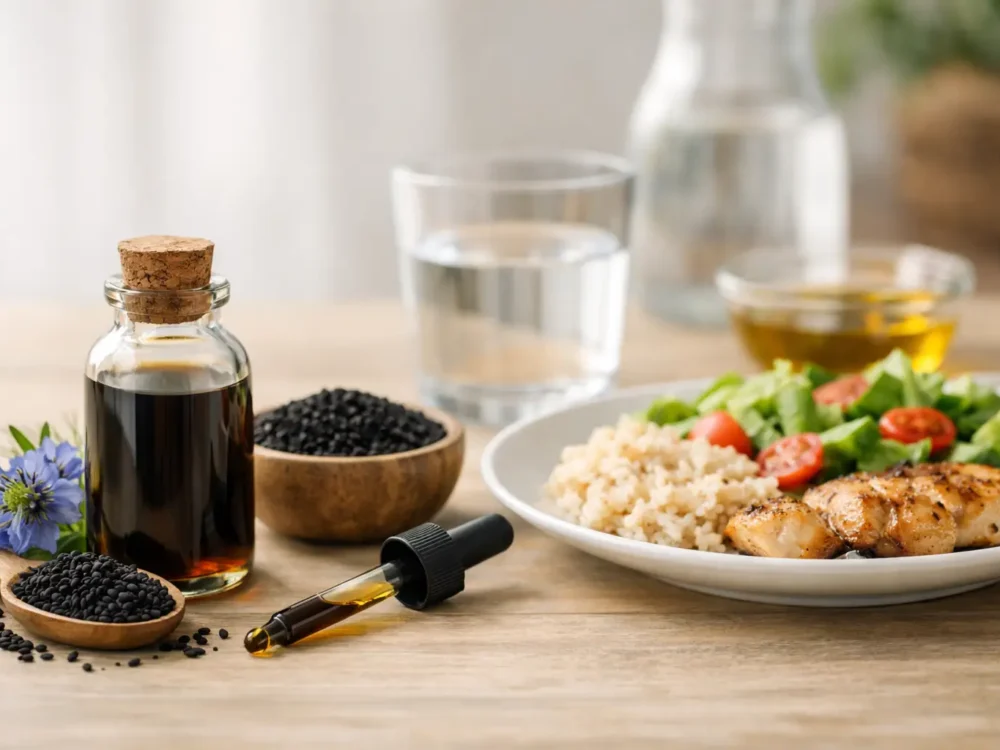
If you keep forgetting your supplements by midday, a black seed oil routine before meals can solve more than timing. It gives the habit a reliable anchor. Breakfast, lunch, and dinner already happen, so attaching black seed oil to one of those moments is often the easiest way to stay consistent without building a complicated wellness plan.
That said, “before meals” is not a magic rule. It is a practical routine choice. Some people like taking black seed oil on an emptier stomach because it feels cleaner and easier to remember. Others notice the strong taste more when they have not eaten yet and prefer softgels or a smaller serving. The best routine is the one you can actually repeat daily.
Why a black seed oil routine before meals works for many people
Black seed oil has a reputation for being a traditional staple, but modern use comes down to one thing – consistency. If you take it randomly, it becomes easy to skip. If you pair it with a fixed point in the day, adherence improves.
Before meals makes sense because it creates a simple cue. You wake up, pour a glass of water, take your serving, then eat breakfast. Or you keep your softgels near your lunch bag and take them 10 to 15 minutes before eating. For busy professionals and fitness-focused adults, routines that remove decision fatigue usually work better than routines that depend on perfect memory.
There is also the format factor. Liquid black seed oil can be earthy, peppery, and intense. Some people appreciate that because it feels more traditional. Others want convenience and consistency, which is where softgels tend to fit better. If taste is the main thing stopping you from using it daily, the format matters just as much as the timing.
How to build your routine without overcomplicating it
Start with one meal, not three. This is where a lot of people go wrong. They get excited, decide to take everything at once, and create a routine that is too ambitious to last. A once-daily habit before breakfast is usually enough to establish consistency.
Give it at least one to two weeks before changing anything. That window helps you answer the real question: can you stick with it? Wellness routines look great on paper. Daily life is the real test.
If mornings are chaotic, shift the habit to lunch or dinner. There is no prize for forcing a schedule that does not match your day. The best timing is the one that feels automatic.
Liquid or softgels?
Liquid black seed oil works well for people who prefer a traditional format and want direct control over serving size. It can also fit nicely into a morning ritual if you do not mind the taste. Just be honest with yourself. If the flavor makes you hesitate every day, the routine may not last.
Softgels are usually the more practical option for travel, office use, and anyone who values convenience. They remove the taste issue, simplify portioning, and make routine adherence easier. For many people, especially those already juggling work, workouts, and family schedules, convenience is not a shortcut. It is the reason a habit survives.
Timing: how long before a meal?
There is no universally perfect number, and that is where a lot of online advice gets too rigid. Most people who prefer taking black seed oil before meals do well with a short window, often around 10 to 30 minutes before eating. The point is not precision down to the minute. The point is repeatability.
If you wait too long, you may forget. If you take it while plating your food or packing your lunch, it is easier to keep the habit intact. A routine that is slightly imperfect but consistent usually beats a routine that is theoretically ideal and rarely followed.
Should you take it on a completely empty stomach?
It depends on your tolerance. Some people feel perfectly fine taking black seed oil before a meal with just water. Others prefer a shorter gap between the oil and the meal itself because strong oils can feel more noticeable on an emptier stomach.
If you are new to black seed oil, it is smart to start conservatively. A smaller serving and a shorter pre-meal window can help you assess how your body responds. If it feels comfortable, you can keep that rhythm. If not, moving it closer to the meal or switching formats may make the routine easier.
What to pair with your black seed oil routine before meals
Water is the obvious starting point. A small glass helps make the habit feel complete and may also reduce the intensity of the taste for liquid users. Beyond that, simplicity wins.
You do not need a stack of five other supplements to make black seed oil “work.” In fact, adding too many moving parts often hurts consistency. If you already use hydration products, ACV tablets, or other daily wellness staples, think in terms of routine flow rather than maximum volume. What can you realistically repeat on a workday, a gym day, and a weekend?
For many people, the cleanest setup is black seed oil before one meal and other wellness products at another fixed point. That keeps the day organized and reduces the chance of skipping everything because the routine feels too crowded.
Common mistakes that make people quit too early
The first mistake is expecting immediate, dramatic results. Black seed oil is usually approached as a daily wellness staple, not a one-time quick fix. If your expectations are unrealistic, even a good routine can feel disappointing.
The second mistake is choosing a format that does not fit your lifestyle. If you are always on the go, a bottle and spoon may sound good in theory but fail in practice. If you dislike swallowing capsules, softgels may be the wrong fit no matter how convenient they are for other people.
The third mistake is starting with too much. More is not always better, especially when you are testing tolerance and trying to build a repeatable habit. Starting lower and staying consistent is often the smarter move.
A practical 3-step routine to try
Keep this simple. Choose one meal you almost never miss. Take your black seed oil shortly before that meal. Then repeat the same process daily for at least a week before making any adjustments.
If you want a cleaner framework, it looks like this: pick your format, set your timing, and remove friction. That might mean leaving softgels in your work bag, placing the bottle next to your breakfast setup, or adding a phone reminder for the first few days. Small cues matter more than motivation.
This is where convenience becomes a real wellness advantage. A clean-label product in a format you will actually use is usually the better buy than a more impressive-sounding option that ends up ignored in the cabinet.
When to adjust your routine
If your current plan feels hard to maintain, change one variable at a time. Do not switch the meal, the serving, the format, and the reminder system all at once. You will not know what actually fixed the problem.
Maybe mornings are too rushed, so lunch becomes the better anchor. Maybe the liquid taste is the issue, so softgels make more sense. Maybe a long pre-meal gap causes forgetfulness, so taking it right before you eat works better. Those are practical adjustments, not failures.
A smart wellness routine should fit real life. It should work on office days, travel days, and low-energy days too. That is the standard worth aiming for.
Who may want extra caution
Black seed oil may not be suitable for everyone, especially if you are pregnant, nursing, managing a medical condition, or taking medications. If any of those apply, check with a qualified healthcare professional before adding it to your routine.
This matters even more if you are the type of shopper who likes combining multiple supplements at once. Natural does not automatically mean risk-free, and convenience should never replace common sense.
If you are looking for a practical place to start, think less about perfection and more about consistency. A black seed oil routine before meals works best when the format suits your lifestyle, the timing feels easy to remember, and the habit is simple enough to keep going long after the initial motivation fades.