Currently Empty: $0.00

A hydration product is no longer just something you grab after an intense workout. The hydration supplement trends 2026 are moving toward cleaner labels, more portable formats, and formulas built for real routines: long workdays, hot commutes, travel, training, and recovery. For shoppers, the shift is useful, but it also makes the category easier to overcomplicate. The best choice is still the one that fits your activity level, diet, and daily habits.
Hydration Supplement Trends 2026: Less Hype, More Fit
The biggest change in hydration is not a single new ingredient. It is a more practical way of thinking about electrolyte support. Consumers are looking beyond brightly colored sports drinks and asking direct questions: How much sodium do I actually need? Is this convenient enough to use consistently? Does the formula align with my preference for vegan, non-GMO, or naturally positioned ingredients?
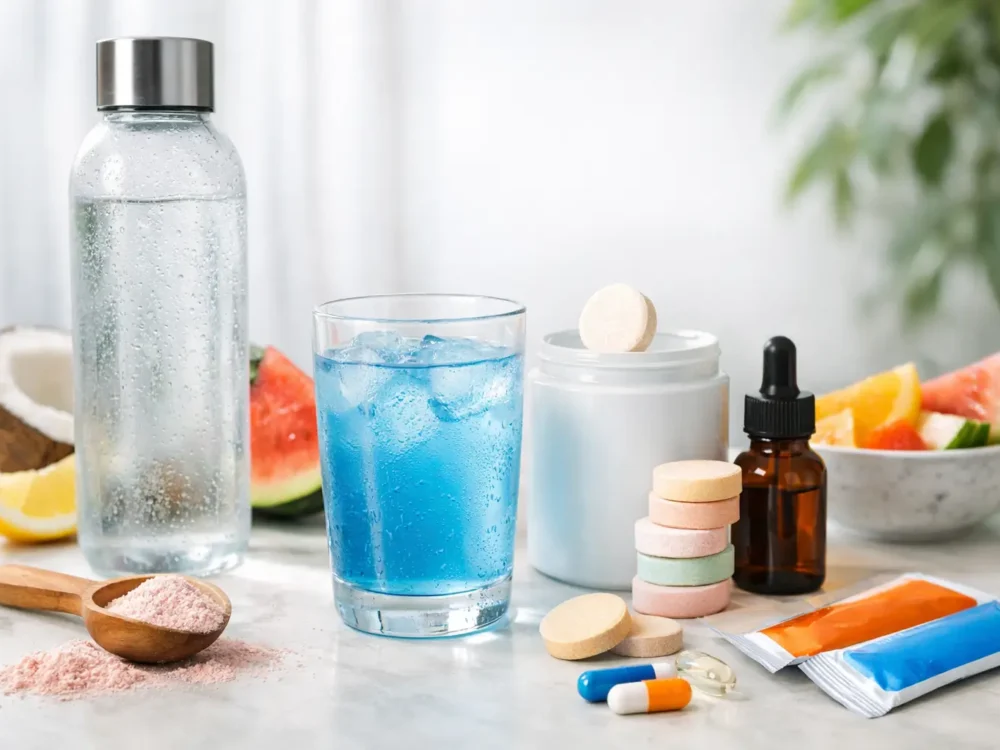
That demand is pushing brands toward straightforward electrolyte products in tablets, powders, and capsules. Each format solves a different problem. Effervescent tablets suit people who want a flavored drink without hauling bottles around. Capsules can be useful for those who prefer a no-mix option or do not want sweetness in every glass. Powders offer flexibility when someone wants to adjust flavor or serving size.
Convenience matters, but it should not replace label reading. A format only works when the formula and your routine make sense together.
Sodium Is Back in the Conversation
For years, many wellness shoppers treated sodium as something to avoid at all costs. In 2026, hydration education is becoming more balanced. Sodium is an essential electrolyte that helps the body retain fluid and supports normal nerve and muscle function. During prolonged sweating, especially in heat, sodium losses can be meaningful.
This does not mean everyone needs high-sodium hydration supplements every day. Someone working at a desk in a climate-controlled office with a balanced diet may simply need regular water and meals. A runner training outdoors for more than an hour, a person doing heated fitness classes, or anyone working long shifts in high heat may have different needs.
The smarter trend is personalization rather than blanket advice. Notice the conditions around your workout. Consider duration, heat, humidity, sweat rate, and whether you see salty residue on your clothing or skin. If you have high blood pressure, kidney disease, heart disease, or have been told to limit sodium or fluid intake, ask a qualified healthcare professional before adding electrolyte supplements to your routine.
Why potassium and magnesium still matter
Sodium may be getting more attention, but it is not the only mineral on the label. Potassium supports normal fluid balance and muscle function, while magnesium is involved in many processes throughout the body, including normal muscle and nerve function. Their presence can round out an electrolyte formula, but more is not automatically better.
A product with an extreme dose of every mineral is not necessarily more effective for everyday use. Look for clear amounts per serving and choose a product designed for your use case, whether that is light daily support, training, or extended outdoor activity.
Clean Labels Are Becoming a Real Buying Standard
“Clean” can mean different things across the supplement aisle, so it is worth being specific. For many shoppers, it means a product with recognizable ingredients, transparent electrolyte amounts, and fewer unnecessary extras. It may also include vegan, cruelty-free, non-GMO, or naturally sourced positioning.
In hydration supplements, clean-label demand is also changing expectations around sugar and artificial colors. Some people want zero-sugar products for daily use. Others may prefer a formula with carbohydrates when they are doing endurance exercise, because carbohydrate intake can be relevant during longer training sessions. Neither approach wins in every situation.
The question is not whether sugar is universally good or bad. It is whether it has a purpose in your routine. For a 20-minute walk or standard office day, a heavily sweetened drink may be more than you need. For long-distance cycling, running, or repeated high-intensity sessions, a product with carbohydrates may be a more appropriate performance option.
A strong label should make the decision easier. Avoid products that hide meaningful quantities inside proprietary blends. You should be able to see the sodium, potassium, magnesium, sugar, and serving directions without guessing.
Effervescent Hydration Is Built for Daily Routines
Effervescent tablets are one of the most practical formats shaping hydration supplement trends 2026. They are compact, easy to store at a desk or in a gym bag, and turn plain water into a more appealing routine. For busy professionals, that can be the difference between drinking consistently and realizing at 4 p.m. that the only beverage consumed all day was coffee.
Taste plays a real role here. If a hydration product tastes overly medicinal, too salty, or aggressively sweet, people often stop using it. A pleasant, lighter flavor can help support consistent water intake without making hydration feel like another task on a long checklist.
That said, effervescent does not automatically mean suitable for everyone. Check for sweeteners, caffeine, sodium level, and how many tablets make up a serving. If you use one daily, these details add up. A straightforward electrolyte effervescent can be an easy fit for workouts, travel days, and warm-weather errands, provided the nutrition panel matches your needs.
Capsule Formats Serve a Different Kind of Convenience
Capsules are gaining ground with shoppers who want hydration support without flavor, mixing, or extra calories. They are particularly useful when water is readily available but a powdered drink is inconvenient, such as during a commute, at a meeting, or while traveling.
However, a capsule is not a substitute for fluids. Electrolytes help support hydration, but they do not hydrate you on their own. If you take an electrolyte capsule, drink water alongside it and follow the serving instructions carefully. This is especially relevant for active people who may mistakenly view a supplement as a replacement for basic hydration habits.
Capsules can also be a good option for people who have already found that many drink mixes do not agree with their preferences or dietary goals. The trade-off is that you lose the flavor cue that encourages some people to drink more water. Choose the format that removes friction from your day rather than creating more of it.
Hydration Is Becoming Part of the Wellness Stack
Another key 2026 shift is the way shoppers are connecting hydration with broader daily wellness. Hydration is showing up alongside sleep routines, protein intake, mobility work, and simple supplement habits. This is a positive move when it stays grounded. Better hydration can support exercise and everyday comfort, but it is not a shortcut for poor sleep, inadequate food intake, or overtraining.
For a practical routine, start with water, regular meals, and an honest look at your activity. Add an electrolyte product when sweat loss, heat, travel, or a demanding schedule makes it useful. Many people do well using it selectively rather than treating every glass of water as a supplement occasion.
A simple approach might look like this: plain water and meals on lower-activity days, an electrolyte tablet or capsule around challenging workouts, and extra attention to fluid intake during hot weather or travel. This keeps the routine flexible and helps prevent unnecessary overuse.
What to Look for Before You Buy
The most useful hydration supplements are transparent, easy to take, and appropriate for your actual day. Before choosing one, check four basics:
- Electrolyte amounts, especially sodium, and whether they suit your activity and dietary needs.
- Sugar, sweeteners, flavoring, and other ingredients you prefer to include or avoid.
- Format practicality: tablets for a drinkable routine, capsules for portability, or powder for flexible mixing.
- Quality signals that matter to you, such as vegan, cruelty-free, non-GMO, or clear ingredient sourcing.
At Sterling Nutrition, the appeal of electrolyte capsules and effervescent tablets comes down to this kind of usability: modern formats that make a consistent hydration routine easier to maintain. The right product should feel simple enough to use again tomorrow, not like a complicated performance experiment.
Hydration in 2026 is getting smarter because shoppers are asking for clarity, not because every routine needs more products. Keep a water bottle close, use electrolytes when your day calls for them, and let convenience support the habit instead of becoming the whole strategy.