
Currently Empty: $0.00

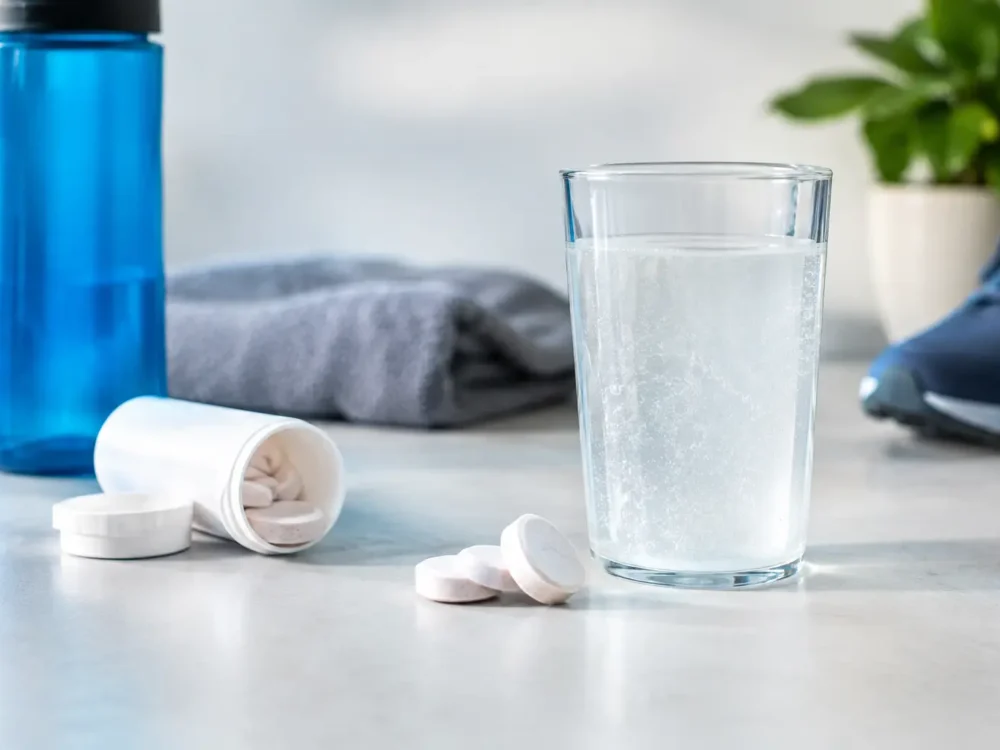
A 6:40 a.m. workout can feel easy on paper: water bottle packed, shoes on, session complete before the workday begins. But when the weather is warm, the commute is rushed, and sweat is pouring by the halfway mark, plain water is not always the whole plan. This electrolyte tablet hydration case study follows a realistic active-adult scenario to show where effervescent hydration can fit, what to monitor, and when a tablet may be more useful than another bottle of water.
This is an educational, illustrative case study rather than a clinical trial. Hydration needs differ with body size, workout duration, climate, diet, medications, and how much a person sweats. The practical goal is not to chase a perfect number. It is to build a routine that is easy to repeat and adjust.
The case: A busy professional with sweaty workouts
Meet Maya, a 34-year-old professional who trains four to five days per week. Her routine includes early treadmill intervals, weekend outdoor runs, and two strength sessions. She starts most mornings with coffee and tends to drink water only once she arrives at the gym.
For shorter strength workouts, this habit causes few problems. The pattern changes during 45- to 75-minute cardio sessions, especially in humid conditions. Maya finishes with a salty taste on her skin, feels unusually flat near the end of the workout, and sometimes develops a mild headache later in the morning. She has been drinking plenty of plain water afterward, but still does not feel fully recovered.
The first question is not, “Do electrolyte tablets work?” It is, “What is this routine missing?” Sweat contains water and electrolytes, including sodium. Replacing fluid without considering electrolyte losses can be less satisfying after a particularly sweaty session, especially when the person is also heading straight into a busy workday.
Why an electrolyte tablet was the practical choice
Maya did not need a complicated sports nutrition stack. She needed a reliable option that would fit in a gym bag, taste pleasant enough to encourage drinking, and be simple to use before a meeting-filled morning.
An electrolyte effervescent tablet met those needs. It could be dropped into water before the workout or mixed for the commute home, without measuring powders or carrying a sticky sports drink. The fizz also made plain water more appealing, which mattered because consistency was Maya’s biggest challenge.
Convenience is not a minor benefit. The best hydration approach is often the one a person will actually use. For active adults who already keep a water bottle at their desk or in their car, a tablet format can turn that existing habit into a more intentional post-sweat routine.
That said, a tablet is not automatically necessary for every workout. A relaxed 30-minute walk, light mobility session, or ordinary day at a desk may only call for regular water and balanced meals. Electrolyte support makes more sense when sweat losses are meaningful: longer training, hot conditions, repeated sessions, travel, outdoor work, or a day when recovery needs to happen quickly.
The electrolyte tablet hydration case study plan
For two weeks, Maya kept her normal training schedule but changed her hydration timing. She did not restrict water or force large amounts at once. Instead, she used a simple three-part plan.
Before training: Start less behind
About 30 to 60 minutes before harder cardio, Maya drank water and used an electrolyte tablet according to its label directions on days she expected heavy sweating. This gave her time to begin the workout hydrated rather than trying to catch up after the first 20 minutes.
She also made one useful adjustment: coffee stayed in her morning routine, but it was no longer the only thing she consumed before exercise. A coffee followed by no fluid was not the same as arriving prepared to sweat.
During training: Drink to the session
For a standard strength workout or a shorter indoor session, Maya sipped water as needed. For longer runs or high-intensity intervals, she brought her prepared drink and took regular sips rather than waiting until she felt extremely thirsty.
There is no prize for finishing a workout with a completely empty bottle, and there is no need to overdrink. The target is comfortable, steady intake that matches the conditions. If fluid sloshing, nausea, or frequent bathroom trips become a problem, that is a sign to scale back and reassess timing or volume.
After training: Support recovery without overthinking it
After a sweaty session, Maya continued drinking water over the next few hours and ate a normal breakfast with protein and carbohydrates. The tablet was part of hydration, not a replacement for food.
That distinction matters. Electrolytes can support fluid replacement, but they do not replace the energy, protein, fiber, and micronutrients that come from meals. A post-workout breakfast could be as simple as eggs and toast, yogurt with fruit and oats, or rice with a protein source. The best option depends on personal preferences and the workout ahead.
What changed after two weeks
The useful outcome was not a dramatic overnight transformation. Maya noticed that her workout hydration felt more deliberate, and she was less likely to reach her desk feeling depleted after hard cardio. The flavored effervescent drink also helped her finish more fluid during warm sessions than plain water alone.
Her biggest improvement was behavioral: the tablet became a cue. Fill the bottle, prepare the drink, train, eat breakfast, and refill water at work. Instead of reacting to a headache or energy dip later, she built a routine around the point where sweat loss occurred.
This is where many hydration plans succeed or fail. People often search for one perfect product, when the larger win is a repeatable system. A tablet can make that system easier, but only if it is used in the situations where it adds value.
What the case does not prove
Maya’s experience does not mean everyone needs electrolytes every day. It also does not mean headaches, fatigue, cramps, or dizziness should automatically be blamed on hydration. Those symptoms can have many causes, including poor sleep, under-fueling, illness, medication effects, or an overly demanding training plan.
People with kidney disease, heart conditions, high blood pressure, or sodium or fluid restrictions should speak with a qualified healthcare professional before making electrolyte supplements a regular part of their routine. The same applies to anyone using medications that affect fluid balance or electrolytes.
Product labels matter, too. Check the serving size, sodium content, added sugar, sweeteners, and directions for use. A clean, convenient format is valuable, but the right formula depends on your training, taste preferences, dietary needs, and how often you expect to use it.
How to apply this to your own routine
Start by looking at your real week rather than copying an athlete’s plan. If you work out lightly and eat regular meals, water may cover most of your needs. If your shirt is soaked after training, you leave visible salt marks on clothing, or you regularly exercise in heat, an electrolyte tablet may be a useful addition to your bottle.
Try it around your sweatiest sessions first. Prepare it before you leave home, follow the label, and pay attention to practical signals: thirst, comfort during training, the ability to drink consistently, and how you feel when the workout ends. Keep the rest of your routine steady long enough to notice patterns.
Sterling Nutrition’s effervescent hydration formats are designed for this kind of everyday usability: simple preparation, portable support, and a cleaner way to make hydration feel less like a chore. Choose the option that suits your routine, then let your training conditions guide how often you use it.
A hydration routine does not need to be complicated to be effective. On the days you sweat more, plan ahead, bring the bottle, and give your body more than an afterthought when the workout is done.