
Currently Empty: $0.00

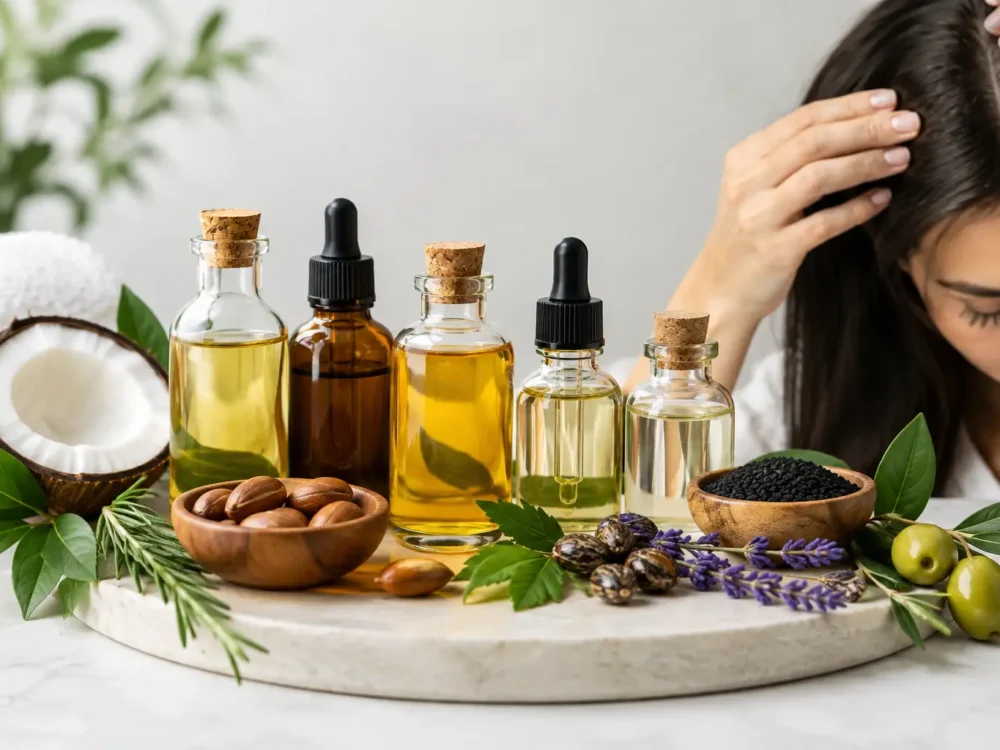
Your scalp can feel oily by lunchtime, tight after shampooing, and irritated after one too many styling products. The best oils for scalp care are not necessarily the richest or most expensive ones. They are the oils that suit your scalp condition, fit your wash schedule, and can be used consistently without leaving your roots greasy or your skin uncomfortable.
A well-chosen oil can soften dry scalp flakes, reduce the rough feeling that comes with product buildup, and make scalp massage a more effective part of a hair-care routine. But oil is not a cure-all. If you have persistent itching, painful bumps, sudden shedding, thick scaling, or patchy hair loss, see a dermatologist rather than trying to oil your way through the problem.
The Best Oils for Scalp Care by Need
1. Castor oil for dry-feeling scalps and protective routines
Castor oil is a classic choice for people who want a richer, more cushioning scalp oil. Its thick texture creates a protective layer that can make dry hair and scalp feel softer, especially when your routine includes frequent heat styling, coloring, or clarifying shampoos.
The trade-off is weight. Pure castor oil can be too dense for fine hair, oily scalps, or anyone prone to buildup. It is also often credited with dramatic hair-growth results that research has not confirmed. Use it for conditioning and massage, not as a guaranteed growth treatment.
For a more manageable application, blend one part castor oil with two parts jojoba or coconut oil. Apply a small amount directly along the scalp, massage for a few minutes, then shampoo thoroughly. Clean, organic castor oil is a smart pick when you want a simple, multipurpose staple without unnecessary fragrance or fillers.
2. Coconut oil for pre-wash softness and breakage support
Extra virgin coconut oil is one of the most practical options for dry hair that also feels rough near the roots. Its fatty-acid profile allows it to penetrate the hair shaft better than many other oils, which is why it works particularly well as a pre-shampoo treatment for hair that is prone to dryness and breakage.
For scalp care, start light. Warm a teaspoon between your palms, work it through the scalp and lengths, and leave it on for 30 minutes before washing. Those with thick, coarse, or curly hair may prefer a longer treatment, while fine-haired shoppers may get better results from a quick pre-wash application.
Coconut oil may not be the right match for everyone. If you have an oily scalp, acne along the hairline, or seborrheic dermatitis, heavy oiling can make buildup harder to manage. In that case, use less often or choose a lighter oil.
3. Jojoba oil for oily or easily congested scalps
Jojoba oil is technically a liquid wax, but it earns its place in any scalp-care lineup because it is lightweight and close in feel to the skin’s natural sebum. It is a strong option for people who avoid oils because their roots become greasy quickly.
Use a few drops, not a full palmful. Massage it into a dry scalp before shampooing, or smooth a tiny amount over dry areas after washing. Jojoba does not need to sit overnight to be useful. A short, controlled treatment is often enough to make the scalp feel more comfortable without flattening your style.
4. Black seed oil for a traditional wellness approach
Black seed oil, also called Nigella sativa oil, has a long history in traditional wellness. Its naturally occurring thymoquinone has attracted research interest for antioxidant and soothing properties, although scalp-specific evidence is still developing. That makes it a thoughtful addition to a care routine, not a replacement for medical treatment.
Its medium-rich texture works best as a pre-wash scalp massage oil or as part of a blend. If you are using a high-thymoquinone black seed oil, begin with a small amount and combine it with a lighter carrier such as jojoba oil. This helps the oil spread evenly and lets you see how your skin responds.
Look for purity details when shopping. A fresh, clearly labeled oil with straightforward ingredients is more useful than a heavily fragranced formula that makes it difficult to identify what your scalp is reacting to.
5. Rosemary oil for targeted scalp massage
Rosemary essential oil is one of the most talked-about oils for hair density and shedding concerns. Small studies have suggested potential benefits for hair growth when it is used consistently, but the research is not a promise of results, and essential oils can irritate the scalp when used incorrectly.
Never apply rosemary essential oil straight from the bottle. Dilute two to three drops in one tablespoon of a carrier oil, such as jojoba or coconut oil, before use. Massage the blend into the scalp for five minutes, leave it on for 20 to 30 minutes, and then wash as usual.
Skip rosemary oil if you have broken skin, active eczema, or a history of fragrance sensitivity. More drops will not produce faster results. In scalp care, careful dilution beats intensity every time.
6. Tea tree oil for occasional flake-prone scalp care
Tea tree oil can feel refreshing when flakes and scalp odor are part of the picture. It has antimicrobial properties, but it is also one of the essential oils most likely to trigger contact dermatitis if applied too strongly. Think of it as an occasional targeted option, not an everyday leave-in oil.
Add one or two drops to a tablespoon of carrier oil, apply before shampooing, and rinse well. Avoid mixing it into an entire shampoo bottle. The concentration can become inconsistent, and it is harder to stop using quickly if irritation starts.
If flakes are greasy, yellowish, persistent, or accompanied by redness, a medicated shampoo may be more effective than oil alone. Oils can support comfort, but they do not address every cause of dandruff.
7. Argan oil for lightweight shine and dry ends
Argan oil is ideal when your scalp is generally balanced but your hair looks dull or feels dry through the mid-lengths and ends. It is lighter than castor oil and less likely to leave a heavy coating, making it a convenient finishing oil for polished, healthy-looking hair.
Use it sparingly near the scalp. One or two drops pressed over dry areas can be enough. For many people, argan oil performs better on hair lengths than directly on the scalp, particularly if roots tend to get oily between washes.
How to Choose the Right Scalp Oil
Start with your main concern, not the latest social-media claim. A tight, dry scalp may benefit from a richer castor and coconut blend. An oily scalp that still feels uncomfortable may prefer jojoba. If you want a more traditional, antioxidant-focused ritual, black seed oil can be a worthwhile choice. For a targeted massage routine, diluted rosemary oil is the better fit.
Ingredient quality matters, especially because oils sit directly against the skin. Choose products with a short ingredient list, avoid added fragrance if you are sensitive, and favor cold-pressed or extra virgin options where applicable. Clean-label signals such as organic, non-GMO, vegan, and cruelty-free can make product selection simpler, but they do not replace a patch test.
Before your first full treatment, place a diluted amount behind the ear or on the inner arm and wait 24 to 48 hours. Do not use the oil if burning, itching, swelling, or a rash develops.
A Simple Oil Routine That Does Not Create Buildup
For most people, one or two scalp oil treatments a week is enough. Part dry hair into sections, apply a small amount directly to the scalp, and use your fingertips to massage in gentle circles. Keep nails out of it. Scratching can irritate the scalp and make flaking worse.
Leave a carrier oil blend on for 20 to 60 minutes before shampooing. If your scalp is very dry and tolerates oil well, an overnight treatment can work occasionally, but protect your pillowcase and wash thoroughly the next morning. Essential-oil blends are better kept to shorter contact times.
Follow with a shampoo that removes residue without making the scalp feel stripped. If hair still looks limp or greasy after washing, reduce the amount of oil before changing products. Most buildup problems come from using too much, too often.
A reliable routine does not need seven bottles on your bathroom shelf. Choose one oil that matches your scalp, use it with care, and give the routine several weeks before deciding whether it earns a permanent place in your hair-care lineup.