Currently Empty: $0.00

A bottle of neon sports drink may feel like the default post-workout choice, but it is not always the most practical way to replace what you lose through sweat. When comparing electrolyte capsules versus sports drinks, the better pick depends on your workout length, sweat level, taste preferences, and how much sugar and packaging you want in your routine.
For busy professionals, gym regulars, runners, and travelers, the biggest question is usually simple: what will you actually use consistently? A hydration solution only works when it is easy to carry, comfortable to drink, and suited to the demands of your day.
What Electrolytes Actually Do
Electrolytes are minerals that carry an electrical charge in the body. Sodium, potassium, magnesium, calcium, chloride, and phosphate all help support fluid balance, muscle function, nerve signaling, and normal energy metabolism.
Sweat contains water and electrolytes, especially sodium. During a short, low-intensity workout, plain water is often enough. But longer sessions, hot weather, high-humidity training, physically demanding work, travel, illness involving fluid loss, or naturally salty sweat can raise the need for electrolyte replacement.
The goal is not to consume electrolytes at every opportunity. It is to replace fluids and minerals appropriately when your body has lost more than water alone.
Electrolyte Capsules Versus Sports Drinks: The Core Difference
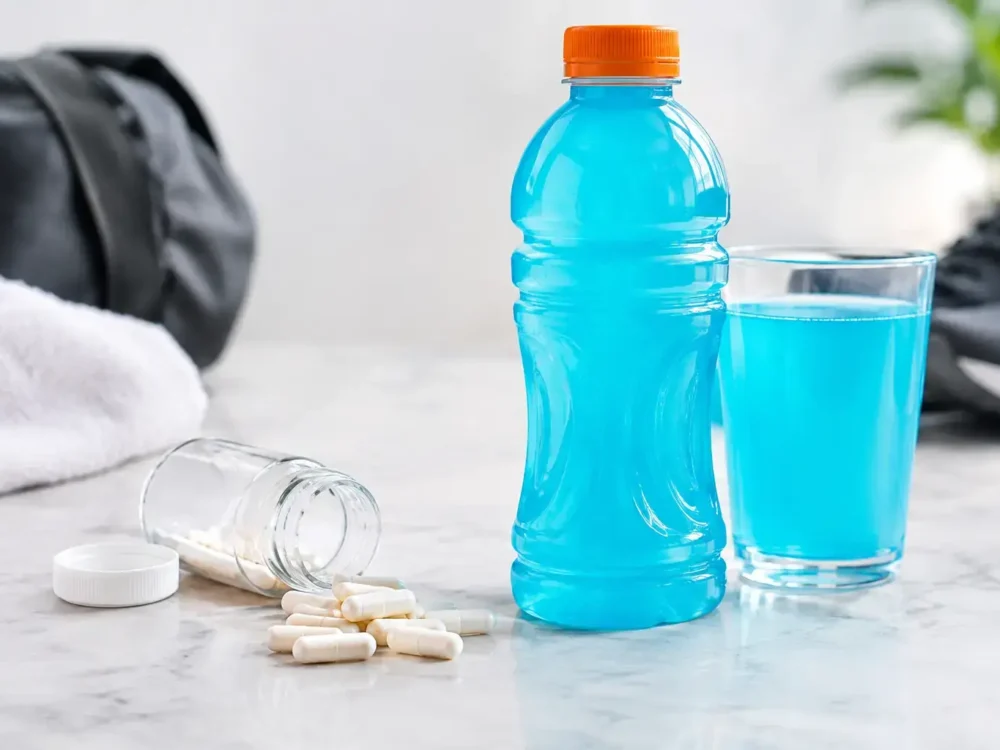
Sports drinks deliver electrolytes in a ready-to-drink liquid, often with carbohydrates for quick energy. Electrolyte capsules deliver concentrated minerals in a compact format, usually taken with water. Both can be useful. Their differences come down to ingredients, convenience, and purpose.
A sports drink can be a smart option during long endurance activity because its carbohydrates may provide fuel while sodium supports fluid retention. This matters more during extended runs, rides, hikes, tournaments, or sessions lasting well over an hour, particularly when intensity is high.
Electrolyte capsules are often better for people who want hydration support without added sugar, sweet flavoring, or the bulk of carrying multiple bottles. They let you drink plain water while still replacing key minerals. That makes them a practical choice for daily gym sessions, hot commutes, travel days, fasting routines, and anyone who prefers a clean, straightforward supplement format.
Sugar, Calories, and Training Fuel
The most visible difference is usually sugar. Many traditional sports drinks contain added sugar, and that is not automatically a problem. During prolonged exercise, carbohydrates can help maintain performance by supplying readily available energy. For an athlete training hard for several hours, a drink with both carbs and electrolytes may be useful.
The trade-off is that the same drink can be unnecessary for a 30-minute weights session, a casual walk, or a normal day at the office. If your activity does not require extra fuel, drinking sugar simply because you want electrolytes may not fit your goals.
Capsules generally separate hydration from calorie intake. You can take one with water and get mineral support without changing your nutrition plan. This is especially useful for people managing added sugar, following a lower-calorie approach, or simply wanting more control over when they consume carbohydrates.
That said, capsules do not replace fuel. If you are doing a long, demanding event and need calories, you will still need to eat or choose a carbohydrate source that works for you. A capsule can handle the electrolyte side of the equation, but it is not designed to power a marathon by itself.
Convenience Matters More Than It Sounds
A sports drink is immediate: open, drink, and go. It can be convenient when you are already at a convenience store, need fluids quickly, or find flavored drinks easier to consume during hard training.
But ready-to-drink bottles can be heavy, expensive when purchased often, and inconvenient to store in a work bag or carry-on. They also create more packaging over time. Powder mixes reduce some of those concerns, although they still require a bottle, water, and mixing.
Electrolyte capsules are built for minimal effort. Keep them in your gym bag, desk drawer, backpack, or travel kit, then take them with the amount of water that suits you. There is no mixing, no sticky bottle, and no need to commit to a specific flavor before your workout even starts.
For people who sweat heavily in Singapore-style heat and humidity, this flexibility can make a real difference. You can continue drinking fresh water throughout the day and use a capsule when your activity, environment, or sweat loss calls for extra support.
Taste and Stomach Comfort
Taste is personal. Some people drink more when hydration comes in a citrus or berry flavor. Others get tired of sweetness quickly, dislike artificial aftertastes, or find strongly flavored drinks hard to tolerate while exercising.
Sports drinks may also contain acids, sweeteners, dyes, or carbonation depending on the formula. None of these ingredients are universally bad, but they can be a poor fit for someone with a sensitive stomach or a preference for simpler formulations.
Capsules skip the flavor issue entirely. Because they are swallowed with water, your hydration stays neutral and customizable. This can be a major advantage for daily use, although capsules may be less appealing for people who struggle to swallow pills or need a reminder to drink enough water.
No matter which format you choose, test it before race day, a long hike, or a major training session. The best product on paper is not the best product if it upsets your stomach when your body is under pressure.
How to Choose the Right Option for Your Routine
Choose based on the situation rather than treating one format as universally superior.
For shorter workouts, strength training, yoga, or a moderately active day, water is often sufficient. An electrolyte capsule may be useful if you sweat heavily, train in extreme heat, or have a clear reason to replenish minerals, but you may not need a sugary drink.
For long-distance running, cycling, team sports, or intense training that lasts more than an hour, a sports drink can be practical when you need both fluid and fast carbohydrates. Look at the sodium and carbohydrate content, not just the front-label claims. A drink that tastes good but is low in sodium may not meet the needs of a heavy sweater.
For travel, outdoor work, hot-weather commuting, and everyday convenience, capsules are hard to beat. They are lightweight, discreet, and easy to pair with water you already have. A clean-label capsule format also suits people who prefer vegan, non-GMO, and naturally positioned wellness essentials without unnecessary extras.
Read the Label, Not Just the Flavor Name
Not all hydration products are formulated alike. When comparing options, check the serving size first. Some bottles contain more than one serving, which changes the real sugar, calorie, and sodium intake.
Then look at sodium. It is one of the primary electrolytes lost through sweat, yet many consumers focus only on potassium because it is familiar. Potassium and magnesium have useful roles, but sodium is often central to effective rehydration after significant sweat loss.
Also consider whether the product contains carbohydrates, caffeine, herbal ingredients, or high-dose minerals. These additions may be helpful in specific contexts, but they should match your needs. More ingredients do not automatically mean better hydration.
People with kidney disease, heart conditions, high blood pressure, or those taking medications that affect fluid or mineral balance should speak with a qualified healthcare professional before using electrolyte supplements regularly. The same goes for anyone experiencing persistent cramps, dizziness, unusual fatigue, or dehydration symptoms.
A Smarter Hydration Routine
For many active adults, the practical answer is not choosing one category forever. Keep water as your baseline. Use electrolyte capsules when you want portable, sugar-free mineral support. Reach for a sports drink when your workout also calls for fast carbohydrates and easy-to-consume fuel.
Sterling Nutrition electrolyte capsules are designed for the routines that do not leave room for complicated prep: early gym sessions, packed workdays, weekend hikes, and travel. The right hydration habit is the one you can repeat with confidence, adjusting for your sweat, training load, and the conditions around you.