Currently Empty: $0.00

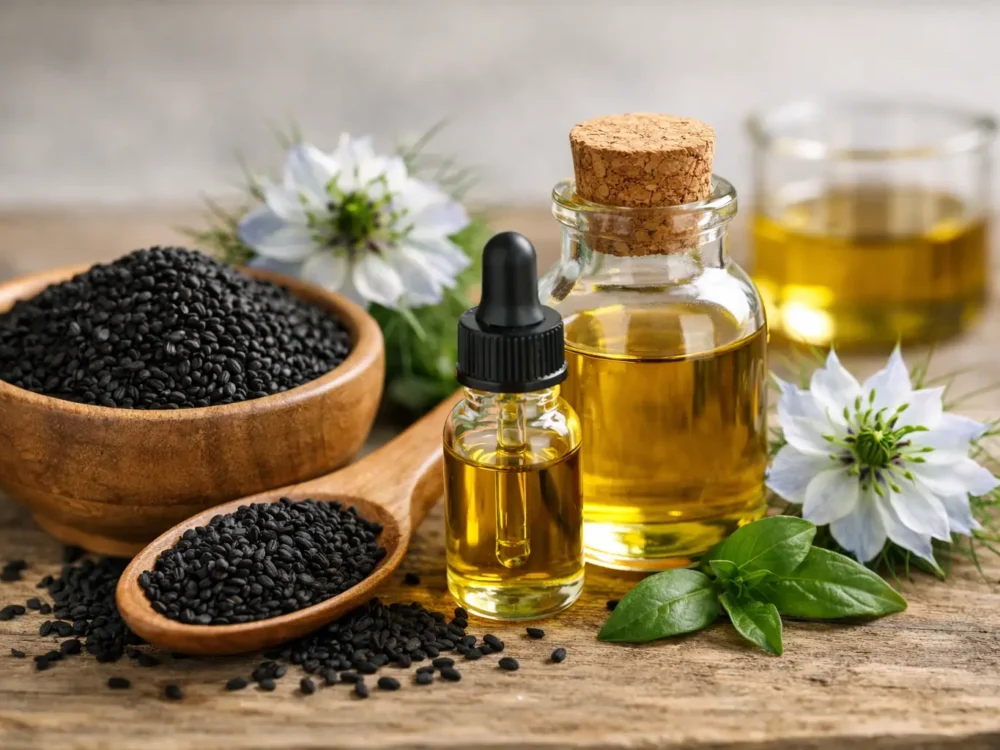
A black seed oil label can say cold-pressed, organic, pure, or premium, but those terms do not tell the full story. So, what is thymoquinone content? It is the amount of thymoquinone, a naturally occurring plant compound, found in black seed oil or a black seed supplement. For shoppers choosing black seed oil for a consistent wellness routine, it is one of the most useful quality markers to understand.
Thymoquinone, often shortened to TQ, is associated with Nigella sativa, the botanical name for black seed. It is one of the best-known active compounds in the seed’s volatile oil fraction. While black seed oil contains many naturally occurring fatty acids and plant compounds, TQ content helps show how much of this specific compound is present in the finished product.
What Is Thymoquinone Content and Why Does It Matter?
Thymoquinone content describes concentration, not simply whether a product contains black seed oil. Two oils can come from the same plant and look similar in a bottle, yet have very different levels of TQ due to the seeds used, growing conditions, extraction methods, and storage.
That distinction matters because shoppers often want more than a generic black seed oil product. They want a formula selected for a measurable purity or potency marker. A stated TQ level gives you a more specific point of comparison than marketing language alone.
For example, an oil labeled with a percentage of thymoquinone is identifying how much TQ it contains by weight. A product labeled 3% TQ contains approximately 30 milligrams of thymoquinone per gram of oil. That does not automatically make it the right product for every person, but it provides a clear, comparable number.
Higher TQ content may appeal to people who prioritize a concentrated black seed oil format. At the same time, a high number should not replace the basics: appropriate serving size, clean ingredients, transparent testing, and a format you will actually use consistently.
Where Thymoquinone Comes From
Black seed oil begins with seeds from the Nigella sativa plant, sometimes called black cumin. TQ occurs naturally in the seed’s aromatic oil components. It is not the same as the fatty oil portion that makes up much of black seed oil, and it is not present at a fixed level in every crop.
Several factors can affect the final concentration. Seed origin and variety matter, as do weather, harvest timing, and how the seeds are handled before pressing. Extraction is another major variable. Heat, light, oxygen, and long storage periods can affect volatile compounds, including thymoquinone.
This is why a bottle’s color, flavor, or strong aroma cannot reliably confirm TQ content. These sensory cues may tell you that an oil has character, but laboratory analysis is the dependable way to verify a specific concentration.
How Thymoquinone Content Is Measured
Reliable thymoquinone content is typically measured through laboratory testing. Methods such as high-performance liquid chromatography, commonly called HPLC, can separate compounds in an oil sample and quantify the amount of TQ present.
Brands may present results as a percentage, milligrams per serving, or both. Percentages are useful for comparing the concentration of the oil itself. Milligrams per serving are useful when you want to know what a daily softgel or teaspoon provides.
Here is the practical math: 1% TQ equals roughly 10 mg of TQ per gram of oil. A 5% TQ oil contains about 50 mg per gram. However, the amount you take depends on the serving size. A small softgel and a full teaspoon can deliver very different amounts of oil, even if both products use the same concentration.
A trustworthy product should make this information easy to find. If a brand uses a precise TQ claim, look for clarity around how the claim is supported, whether it applies to the finished oil, and whether testing is conducted on batches or only referenced generally.
High TQ vs. Standard Black Seed Oil
Neither format is automatically better in every situation. Standard black seed oil may suit shoppers who simply want a traditional daily oil, prefer a milder option, or use it as part of cooking and personal-care routines. High-thymoquinone black seed oil is designed for people who want a more concentrated, measurable TQ profile in their daily supplement routine.
Convenience also matters. Liquid oil can be flexible for those comfortable with its naturally bold taste. Softgels offer a simple, no-mess alternative for travel, workdays, and routine consistency. The best choice is often the one that fits your habits well enough to use as directed.
It is also worth separating concentration from quality. A high TQ number is meaningful only when the product is handled carefully and supported by transparent standards. The oil should be protected from excessive heat and light, packaged appropriately, and free from unnecessary fillers if you are buying a softgel format.
How to Compare Black Seed Oil Products
Start with the product label, but read beyond the front-panel claim. If thymoquinone content is a priority, identify the stated percentage or milligram amount and confirm the serving size. This prevents an easy mistake: comparing one product’s percentage with another product’s per-serving figure as if they were identical measurements.
Next, consider the ingredient list. For an oil, ideally you should know exactly what you are getting: Nigella sativa seed oil and, when applicable, the softgel capsule ingredients. Clean-label preferences such as non-GMO, vegan, cruelty-free, and minimal additives can help narrow the field, but they do not independently verify TQ concentration.
Packaging deserves attention too. Black seed oil is sensitive to its environment. A dark bottle, sealed capsules, and sensible storage guidance help protect oil quality over time. Once opened, follow the label directions and avoid leaving liquid oil in bright, warm areas such as a sunny kitchen counter.
Finally, be wary of broad promises. Black seed oil has a long history of traditional use and remains a popular wellness staple, but a TQ percentage is a composition marker, not a guarantee of a particular health outcome. Responsible brands explain what is in the product without presenting it as a replacement for medical care.
Choosing a Daily Format You Can Maintain
A supplement routine works best when it is realistic. If you dislike the peppery taste of black seed oil, softgels can make daily use easier while providing a pre-measured serving. If you prefer liquids and want control over your serving size, oil may be a better fit.
If you are new to black seed oil, begin with the labeled serving instead of assuming more is better. People who are pregnant or nursing, managing a medical condition, taking medications, or preparing for surgery should check with a qualified healthcare professional before adding a concentrated supplement. This is especially sensible with products that feature a higher TQ concentration.
Sterling Nutrition’s High Thymoquinone black seed oil formats are built around this practical idea: clear potency markers and convenient daily use can coexist. Whether you choose liquid oil or softgels, the goal is a clean, understandable product that fits your routine.
Thymoquinone content gives you a smarter way to assess black seed oil than relying on a vague premium claim. Check the concentration, understand the serving size, look for transparent quality practices, and choose the format you can use consistently. That is how a traditional wellness ingredient becomes a more confident everyday choice.