Currently Empty: $0.00

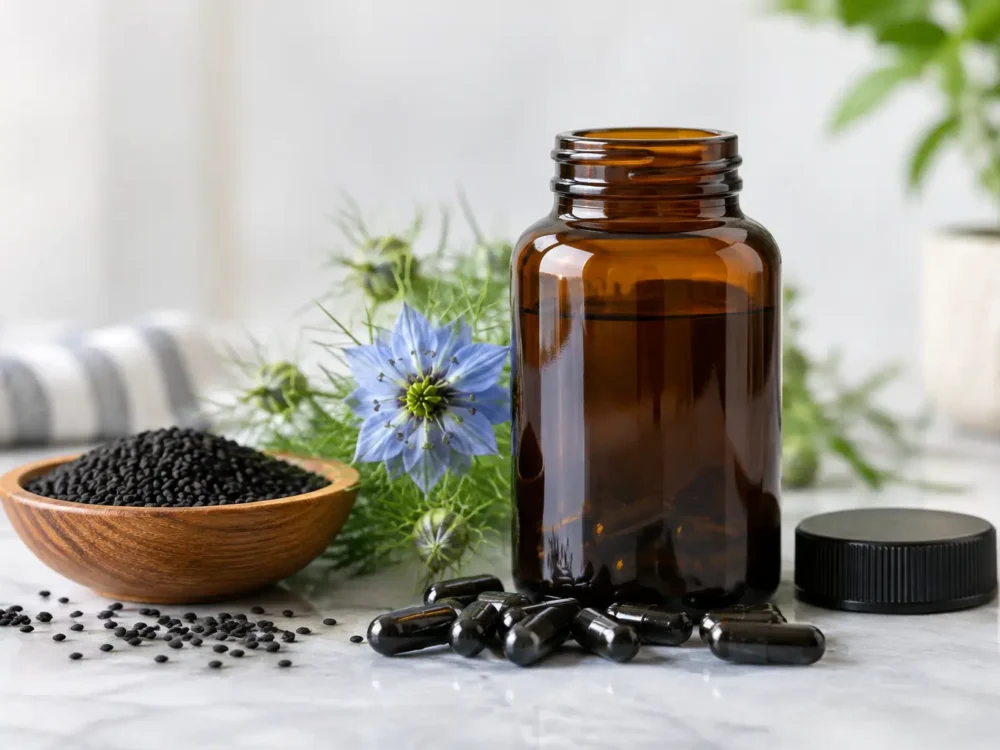
Black seed oil has earned a place in many wellness cabinets, but not every bottle offers the same experience. This thymoquinone supplement review focuses on the details that matter when you want a clean, convenient product for a consistent daily routine: the active compound, the oil quality, the delivery format, and the label standards behind it.
Thymoquinone, often shortened to TQ, is one of the best-known naturally occurring compounds in Nigella sativa, the plant behind black seed oil. For shoppers, the practical question is not whether a product uses the words “black seed oil.” It is whether the product gives you enough information to judge its quality and use it confidently.
What Thymoquinone Means on a Supplement Label
Thymoquinone is a naturally occurring constituent of black seed oil. It is widely studied for its antioxidant activity and its potential role in supporting healthy inflammatory balance. That research is promising, but it should not be confused with a guarantee that a supplement will treat, prevent, or cure a medical condition.
The TQ percentage on a product label is useful because it gives you a clearer indication of the oil’s active-compound profile. Traditional black seed oil can vary substantially depending on the seed source, growing conditions, extraction method, and storage. A high-thymoquinone product is designed for shoppers who want a more standardized option rather than relying on an unspecified oil profile.
Still, higher is not automatically better for every person. A more concentrated product may suit someone who already knows they tolerate black seed oil well and values a measured routine. If you are completely new to black seed oil, starting conservatively and following the serving instructions is the smarter move.
Thymoquinone Supplement Review: The Criteria That Matter
A useful review goes beyond a star rating or a vague claim that a product “works.” Supplements are personal, and results can depend on diet, sleep, training, stress, and consistency. Instead, evaluate the product on the factors that make daily use more transparent and realistic.
1. Clearly stated thymoquinone potency
Look for a label that identifies the thymoquinone content or makes a specific potency claim. This helps distinguish a high-TQ black seed oil from a standard oil with no stated active-compound level. If the information is missing, you are left guessing about what makes the product different.
Potency should be paired with a clear serving size. You should be able to tell how many softgels or how much oil makes up one serving, and how many servings are in the bottle. Straightforward labeling makes it easier to compare value and maintain a routine without accidental overuse.
2. Oil quality and ingredient simplicity
The best black seed oil supplements keep the formula focused. Check whether the product identifies Nigella sativa oil and whether it avoids unnecessary fillers, artificial colors, or confusing proprietary blends.
Cold-pressed oils are popular because the process is intended to preserve the natural character of the oil without harsh refining. Packaging matters too. Oil is sensitive to heat, light, and air, so dark, well-sealed bottles or protected softgel formats can be practical choices for maintaining product quality throughout the bottle’s use.
3. A format you will actually use
Liquid black seed oil is traditional and versatile. Some people enjoy adding it to a wellness routine at home, while others prefer the ability to adjust their serving more precisely. The trade-off is its distinct peppery taste and aroma, which can make consistency difficult for busy schedules.
Softgels remove that friction. They are portable, pre-measured, and easy to keep beside other daily essentials. For professionals commuting, traveling, or building a simple morning routine, this convenience can be the difference between an occasional purchase and a product used consistently.
Neither format is universally superior. Choose liquid oil if you value flexibility and do not mind the flavor. Choose softgels if convenience, taste-free use, and reliable portioning are your priorities.
4. Clean-label signals that match your standards
For many supplement shoppers, quality includes what is left out. Depending on your preferences, check for vegan, non-GMO, cruelty-free, organic, or natural-ingredient positioning. These markers do not replace good manufacturing and transparent labeling, but they can help you select a product that fits your values.
Be specific about what each claim means to you. For example, a vegan capsule may be important if you avoid gelatin, while organic certification may matter most if you prioritize how the seeds are grown. A good product page should make those decisions easy rather than hiding essential details in fine print.
What Research Can and Cannot Tell You
Thymoquinone has attracted scientific interest because of its antioxidant and anti-inflammatory properties in laboratory and preclinical research. Human research on black seed oil and Nigella sativa is growing, with studies examining areas such as metabolic wellness, immune function, and general inflammatory markers.
That is encouraging context, not a reason to oversimplify the evidence. Study designs, forms of black seed, doses, and participant populations differ. A result seen with a seed powder, for example, cannot automatically be applied to a high-TQ oil softgel. Individual response also varies.
The most responsible way to use a thymoquinone supplement is as one part of a broader routine. It cannot replace balanced meals, movement, adequate hydration, sleep, or medical care. Think of it as a targeted wellness staple, not a shortcut.
Who May Appreciate a High-TQ Black Seed Oil Routine
High-thymoquinone black seed oil can appeal to adults looking for a convenient, plant-based addition to their daily wellness habits. It is especially practical for people who already use traditional remedies but want a modern, measured format that travels easily and fits a structured supplement plan.
It may also suit shoppers who want more than a generic “black seed oil” label. A stated TQ level provides an extra point of comparison when you are evaluating products across price points. That said, a higher concentration can cost more, so the right choice depends on your goals, budget, and willingness to take it regularly.
If you are pregnant, breastfeeding, managing a health condition, preparing for surgery, or taking prescription medication, speak with a qualified healthcare professional before adding black seed oil or thymoquinone to your routine. This is particularly sensible for anyone using medication that affects blood sugar, blood pressure, or blood clotting.
How to Start Without Overcomplicating Your Routine
Follow the serving directions on the product label and take the supplement consistently rather than changing several wellness habits at once. Softgels are often easiest with a meal and a glass of water, especially if you have a sensitive stomach. Keep the bottle somewhere visible, such as beside your breakfast items or daily hydration supplements.
Give your routine time, but stay observant. If a product causes digestive discomfort or any unwanted reaction, stop use and seek professional guidance. A supplement that looks impressive on paper is not the right fit if it does not feel comfortable or practical in your day-to-day life.
For shoppers who value clear potency, clean ingredients, and easy daily use, a high-TQ black seed oil softgel can be a smart upgrade from an unspecified oil. Sterling Nutrition’s approach is simple: prioritize transparent quality markers, choose the format you can stick with, and let consistency do the hard work.