Currently Empty: $0.00

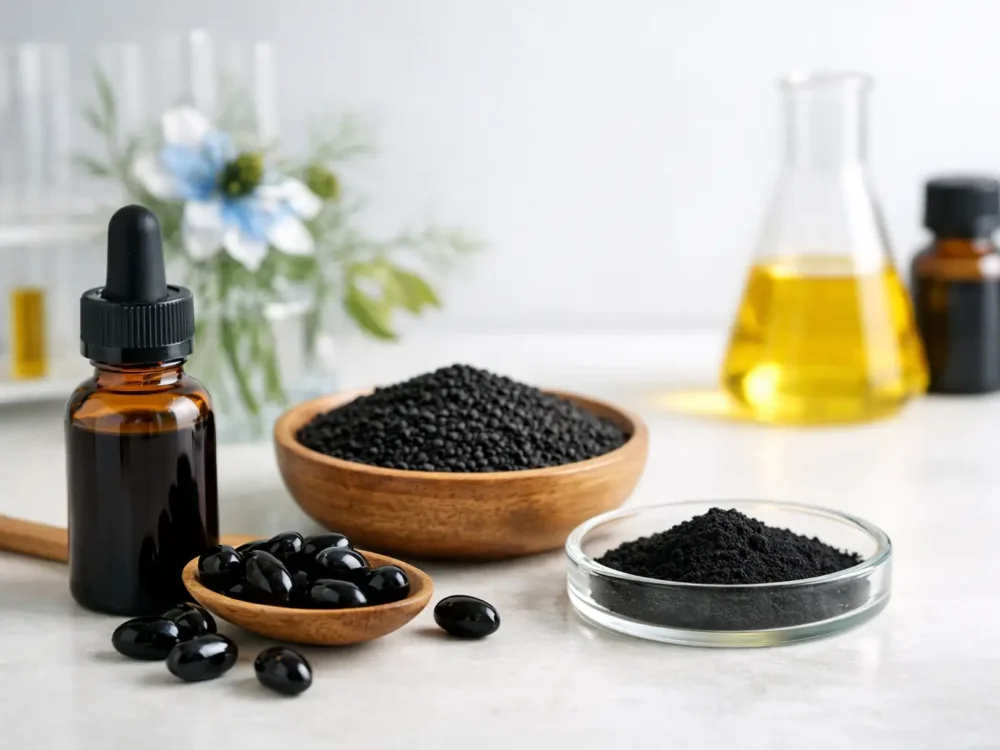
A black seed oil label can look impressive while telling you very little about the compound many shoppers are actually seeking: thymoquinone, or TQ. This thymoquinone potency guide cuts through vague “high strength” language so you can compare products based on what matters – a stated TQ level, thoughtful sourcing, proper packaging, and a format you will genuinely take consistently.
For busy wellness routines, potency is not about chasing the biggest number on the bottle. It is about choosing a clean, reliably made black seed oil product that fits your needs without guesswork.
What thymoquinone is and why potency gets attention
Thymoquinone is one of the naturally occurring bioactive compounds found in black seed oil, which comes from Nigella sativa seeds. Black seed has a long history in traditional wellness practices, while thymoquinone is the constituent most commonly discussed in modern research around the oil’s antioxidant and inflammation-related activity.
That does not mean every benefit associated with black seed oil can be credited to TQ alone. The oil contains a wider mix of fatty acids and plant compounds, and researchers are still working to clarify how those components act individually and together. Still, a verified TQ percentage gives shoppers a more useful point of comparison than a generic claim of “pure black seed oil.”
A standard black seed oil may have a naturally variable TQ content depending on seed origin, harvest conditions, extraction method, storage, and age. A high-thymoquinone product is formulated or selected to provide a more defined concentration. That distinction is valuable when you want a consistent routine rather than a bottle that may vary significantly from batch to batch.
Thymoquinone potency guide: How to read the label
The most helpful labels state thymoquinone as a percentage, such as 2%, 3%, or 5%, or list the amount in milligrams per serving. Neither format is automatically superior, but the product should make the information easy to find.
A percentage tells you how much TQ is present relative to the oil. Milligrams per serving tell you the practical amount you receive in your chosen daily dose. If a label provides both, it is easier to compare products fairly.
For example, a 5% TQ oil contains more thymoquinone per gram of oil than a 2% TQ oil. But the right choice still depends on serving size, how often you plan to use it, and whether the manufacturer provides transparent quality information. A higher percentage without batch testing or sensible storage guidance is not automatically a better buy.
Be cautious with phrases like “maximum potency,” “super strength,” or “premium grade” when there is no stated TQ percentage or milligram amount. These phrases can describe marketing position rather than measurable content. If potency is your priority, look for a number and the quality practices behind it.
Percentage versus total bottle size
Do not confuse a large bottle with a high-potency product. Bottle size tells you how much oil is included; TQ percentage tells you the concentration. A larger bottle of low-TQ oil may deliver less thymoquinone per serving than a smaller bottle with a clearly stated high-TQ standard.
The smartest comparison is cost per serving at the potency you want. This helps you avoid paying extra for packaging, oversized bottles, or claims that do not translate into a defined daily amount.
Softgels versus liquid oil
Liquid black seed oil is flexible. You can adjust the amount easily, add it to a routine, and see the oil itself. The trade-off is its distinctive peppery taste and the need for careful measuring.
Softgels offer a cleaner, more portable option for workdays, travel, or anyone who does not enjoy the flavor. They also make serving consistency simple. When comparing softgels, check the oil amount per capsule and the stated TQ standard, not just the number of capsules in the bottle.
Neither format is universally better. The better format is the one you will use as directed, store properly, and replenish before your routine drops off.
Four signs of a credible high-TQ product
Potency should never be separated from product quality. Use these four checks when evaluating a black seed oil supplement:
- A clearly stated TQ level: Look for a percentage or milligram amount, rather than a broad strength claim.
- Batch-focused testing: Brands should be able to support purity and potency standards through appropriate quality testing.
- Protective packaging: Dark glass bottles, opaque softgel packaging, and clear storage instructions help protect oil from light and heat exposure.
- A clean, understandable ingredient panel: Avoid unnecessary fillers when you are looking for a straightforward black seed oil product. For softgels, check the capsule material if vegan sourcing matters to you.
These signals work together. A high percentage is useful, but it has less value if the oil has been poorly handled or if the brand is unclear about what is actually inside the bottle.
Freshness can affect real-world potency
Plant oils are sensitive products. Heat, air, and light can gradually affect quality over time, which is why packaging and storage are more than small details.
Keep black seed oil tightly sealed, away from direct sunlight, and out of hot cabinets near the stove. Follow the label for refrigeration guidance. Softgels should also be stored in a cool, dry place and kept away from humid bathroom counters or hot cars.
Check the best-by date before purchasing and pay attention to the product’s smell and taste after opening. Black seed oil has a naturally bold, earthy, slightly peppery profile. An unusually stale or rancid odor is a reason to stop using it and contact the seller.
Freshness matters especially if you buy several bottles during a promotion. Bundles can be excellent value for a routine product, but only stock up on an amount you can use within the stated shelf-life and store correctly.
Choosing a TQ level for your routine
There is no single TQ percentage that fits every person. Some shoppers prefer a moderately concentrated oil for daily general wellness, while others specifically seek a high-TQ formula because they want a more targeted, measurable option.
If you are new to black seed oil, beginning with the manufacturer’s suggested serving can help you assess tolerance. More is not always better. A higher-potency formula may allow for a smaller serving, but that does not mean you should exceed label directions or combine it casually with other supplements that may affect the same health goals.
Black seed oil is a supplement, not a replacement for medical care, balanced meals, sleep, or prescribed treatment. Speak with a qualified healthcare professional before using it if you are pregnant or nursing, preparing for surgery, managing a medical condition, or taking medications, particularly medication for blood sugar, blood pressure, blood clotting, or immune-related conditions.
Make potency part of a routine you can keep
The best black seed oil purchase is not necessarily the one with the loudest potency claim. It is the one that gives you clear TQ information, trustworthy quality signals, a convenient format, and a serving size that works with your everyday schedule.
At Sterling Nutrition, that practical standard means looking beyond the front-label headline: choose clearly labeled high-TQ black seed oil, protect it from heat and light, and build it into a simple routine you can maintain. Consistency, transparency, and smart storage will take you further than chasing a number alone.